Curtain Call at Home: How Americans Are Crafting Throne-Worthy Private Theaters
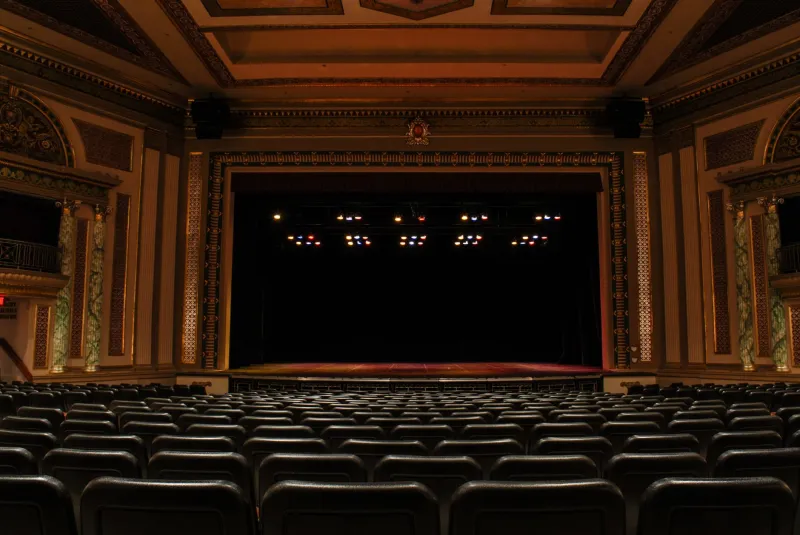
There is a particular magic that descends upon a great theater the moment the house lights dim. The hush of an expectant audience, the warm amber glow of stage lighting catching the gilded moldings — these are sensory rituals that have defined live performance for centuries. For a growing number of Americans, however, the curtain no longer rises exclusively in grand civic halls or on the storied stages of Manhattan's Theater District. Increasingly, it rises at home.
The luxury home theater movement, once the exclusive province of Hollywood executives and tech billionaires, has expanded dramatically in recent years into something far more democratized — and far more theatrical. Where previous generations were content with a large-screen television and a surround-sound receiver, today's enthusiasts are commissioning custom acoustic panels, installing motorized velvet drapes, and sourcing vintage opera seats from decommissioned playhouses. The pursuit, as one Chicago-based collector described it, is nothing short of "bringing the royal box into the living room."
The Architecture of Immersion
Designing a home theater with genuine theatrical gravitas requires more than purchasing the right equipment. According to professionals who specialize in residential entertainment architecture, the most successful spaces begin with an understanding of how great performance venues manipulate atmosphere through physical design.
"The finest theaters in the world — think the Metropolitan Opera House or the Auditorium Theatre in Chicago — were built to make every audience member feel significant," explains one Los Angeles-based acoustic architect who has designed private screening rooms for clients across the country. "The curve of the balcony, the depth of the ceiling, the absorption of sound — these are not decorative decisions. They are experiential ones."
For homeowners working with standard rectangular rooms, achieving this sense of architectural grandeur demands creative intervention. False archways constructed from decorative molding can evoke the proscenium framing of a traditional stage. Coffered ceilings, particularly when finished in deep jewel tones — midnight navy, forest green, or the ever-regal burgundy — lend an immediate sense of height and ceremony. Several designers recommend installing recessed LED lighting systems capable of mimicking the warm, incandescent quality of vintage theater illumination, which differs substantially from the cooler tones of modern residential fixtures.
Furnishing the Royal Box
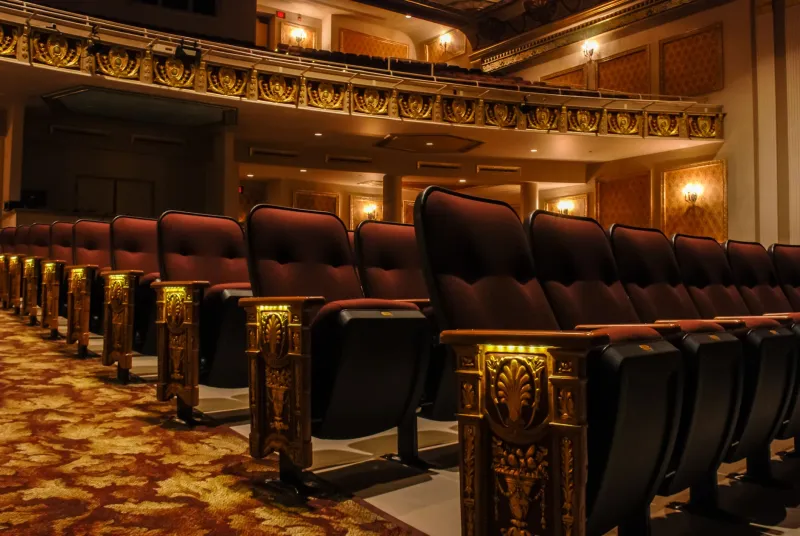
Perhaps no element signals theatrical intent more immediately than seating. The standard reclining home theater chair, while comfortable, carries none of the ceremonial weight associated with a true performance venue. Discerning enthusiasts have turned to a more deliberate approach.
Antique and architectural salvage dealers across the United States have reported increased interest in original theater seating — particularly the ornate, upholstered chairs recovered from mid-century movie palaces and regional opera houses that underwent renovation or closure. A set of six velvet-cushioned seats from a 1940s-era Baltimore theater, for instance, recently sold through a Pennsylvania salvage firm for a sum that, while not inexpensive, remained well within the reach of a committed enthusiast.
For those unwilling or unable to source period pieces, contemporary furniture manufacturers have responded to the demand. Several American upholstery studios now offer custom seating in period-appropriate silhouettes — high-backed, tufted, and finished in fabrics that would not look out of place in the stalls of a Victorian playhouse. Deep jewel tones and rich brocades remain the most popular choices.
"People want to feel that they are attending an event, not simply watching a screen," notes one New York-based interior designer whose practice has increasingly pivoted toward theatrical residential spaces. "The furniture is the first signal that something ceremonial is about to occur."
Sound Fit for a Sovereign
No home theater aspires to regal status without an audio system commensurate with its visual ambitions. The past decade has witnessed extraordinary advances in residential audio technology, and the gap between a professional performance space and a well-appointed home room has narrowed considerably.
Immersive audio formats — Dolby Atmos chief among them — now allow sound to move three-dimensionally through a space, enveloping listeners in a manner that approximates the acoustic experience of a live performance. When paired with high-quality speakers discreetly integrated into walls and ceilings, the effect can be genuinely transporting.
For those wishing to honor the theatrical tradition more directly, some enthusiasts have gone further still, commissioning recordings of actual Broadway productions — cast recordings, archival broadcasts, and even original cast performances captured in high-resolution audio — to serve as the primary content for their spaces. One collector in Nashville has assembled what he describes as a "living archive" of American musical theater, experienced exclusively through his home theater's concert-grade speaker array.
Regal Results on a Measured Budget
The aspiration toward theatrical grandeur need not demand theatrical expenditure. Several design professionals consulted for this feature emphasized that the most impactful transformations are frequently achieved through relatively modest interventions.
Heavy, floor-to-ceiling drapes — whether in velvet, damask, or a quality faux equivalent — remain among the most cost-effective means of dramatically altering a room's acoustic and visual character. A set of motorized curtains capable of parting ceremoniously at the start of a viewing can be sourced and installed for a fraction of the cost of structural renovation. Similarly, the addition of a small, decorative stage platform at the front of the room — even one measuring only a few inches in height — creates a psychological division between performance space and audience that significantly enhances the sense of occasion.
Lighting, too, offers considerable opportunity for transformation at moderate cost. Smart bulb systems capable of replicating the warm pre-show amber of a Broadway house, the gradual dimming of the five-minute call, and even the cool blue of an intermission are now widely available and readily programmable.
The Performance Awaits
What unites the collectors, designers, and devotees at the heart of this movement is not merely a love of cinema or even of theater in the conventional sense. It is a belief — deeply held and elegantly expressed — that the act of watching, of listening, of being transported by performance, is itself a ceremonial undertaking. One worthy of surroundings that honor its significance.
At Tsar Folies, we have always maintained that every performance deserves to be received as a royal affair. It is gratifying, and perhaps not entirely surprising, to find that a growing number of Americans appear to agree — and are constructing the thrones from which to prove it.