The Iron Throne Behind the Curtain: How Broadway's Stagehands Built an Empire No Spotlight Can Reach

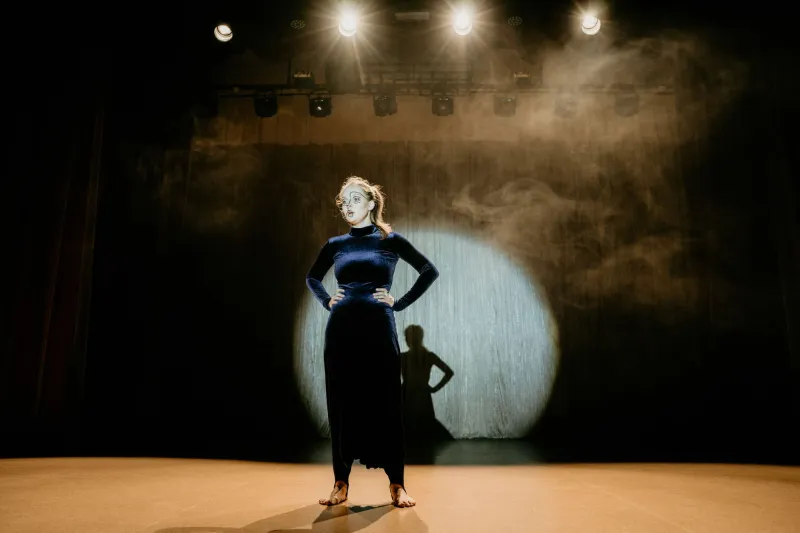
Photo by Photo by Quilia on Unsplash on Unsplash
On any given Broadway opening night, the audience's gaze ascends toward the performers — toward the sequined costumes, the soaring voices, the choreography that seems to defy human limitation. Almost no one looks toward the wings. Almost no one considers the seventy or eighty figures dressed in black who have spent the preceding weeks engineering the very world those performers inhabit. That oversight is, in its way, entirely by design. And yet, to understand how Broadway truly functions — how its grandest spectacles are raised and dismantled, how its most celebrated productions survive or collapse — one must eventually turn toward the darkness at the edge of the stage.
The stagehands of Broadway do not merely build sets. They govern them.
A Kingdom Assembled in the Dark
The International Alliance of Theatrical Stage Employees, Moving Picture Technicians, Artists and Allied Crafts — known universally as IATSE — was founded in 1893, making it one of the oldest entertainment labor unions in North America. Local One, the New York chapter that covers Broadway's stagehands, has operated with particular authority for well over a century. Its members include carpenters, riggers, electricians, props artisans, automation operators, and a constellation of other specialists whose individual expertise, when combined, produces what audiences experience as seamless theatrical magic.
The sheer technical complexity of a modern Broadway production is, by any measure, staggering. A large-scale musical may employ hydraulic stage lifts capable of hoisting thousands of pounds, automated flying systems that move scenery through the air at precisely calibrated speeds, and computerized lighting rigs containing thousands of individual instruments. Someone must program, maintain, and operate every one of those systems — and do so eight times a week, across a run that might last years.
That someone is, almost invariably, a member of Local One.
The Architecture of Collective Power
The union's influence over Broadway is not merely a function of technical necessity. It is also a product of decades of strategic collective bargaining that has secured its members some of the most comprehensive labor protections in American entertainment. Minimum crew requirements, overtime provisions, and jurisdiction clauses — the contractual architecture that governs every Broadway house — were built through negotiations that occasionally, and dramatically, brought the entire industry to a halt.
The 2007 IATSE strike remains the most vivid recent example. When Local One walked off Broadway's stages that November, productions went dark within hours. The strike lasted nineteen days and cost the industry an estimated thirty million dollars. It was, in the language of power, a demonstration. The message was received.
What distinguished that dispute — and others like it — was not simply the financial leverage the union exercised, but the degree to which it exposed Broadway's fundamental dependency on its technical workforce. A theater without its stagehands is, quite literally, an empty room with expensive equipment no one knows how to operate.
From Mechanics to Creative Collaborators
For much of Broadway's history, the stagehand's role was understood in purely mechanical terms: build what the designer draws, move what the director instructs, operate what the production requires. That understanding has undergone a quiet but profound transformation over the past three decades.
The automation revolution that swept through Broadway beginning in the 1990s — accelerated by productions such as The Phantom of the Opera, Miss Saigon, and later Spider-Man: Turn Off the Dark — demanded a new kind of stagehand. One who could not merely execute physical labor, but who could think in code, troubleshoot computerized systems under pressure, and collaborate with designers on the engineering of effects that had never been attempted before.
Head carpenters and automation supervisors on major productions now participate in design meetings. They review technical drawings not merely for buildability, but for safety margins, load tolerances, and operational rhythm. They are, in the fullest sense, co-architects of the theatrical experience — even if the program credits rarely reflect that reality.
"The designer imagines it," one veteran Broadway carpenter once remarked in an industry interview. "We figure out whether it can actually exist in the world."
The Invisible Choreography
Perhaps the most underappreciated dimension of the stagehand's craft is its temporal precision. During a performance, the movement of scenery, props, and rigging must be synchronized not merely with the action onstage, but with the music, the lighting cues, and the movement of the performers themselves. A flat that arrives three seconds late, a turntable that accelerates too quickly, a fly piece that descends at the wrong angle — any of these failures can injure a performer, ruin a scene, or, in the most serious cases, endanger an entire company.
The backstage choreography of a large Broadway musical is, in its own right, a performance. Stagehands move through predetermined paths in near-total darkness, communicating through headsets, executing changes that must be completed in seconds. The discipline required is not unlike that demanded of the performers on the other side of the proscenium — it simply goes unseen.
What the Darkness Conceals
There is a particular kind of institutional knowledge that accumulates in a Broadway house over years and decades — an understanding of a building's quirks, its structural idiosyncrasies, the particular behavior of its fly system on a humid afternoon. That knowledge lives almost exclusively in the heads of the stagehands who have worked those houses across generations. When a new production moves in, it inherits not only a physical space but a human archive.
This is the empire that Broadway's stagehands have built: not one of glamour or public recognition, but of indispensability. It is an empire constructed from expertise, protected by solidarity, and renewed with every performance. The spotlight, after all, illuminates only what someone in the darkness has chosen to reveal.
At Tsar Folies, we have long celebrated the visible sovereigns of the stage — the performers, the directors, the designers whose names appear above the title. But the truest measure of theatrical power may belong to those whose names appear nowhere at all, and without whom the entire royal apparatus would simply cease to function.