The Gauntlet Before the Crown: Inside Broadway's Most Punishing Tradition

Photo by Photo by Clark Royandoyan on Unsplash on Unsplash
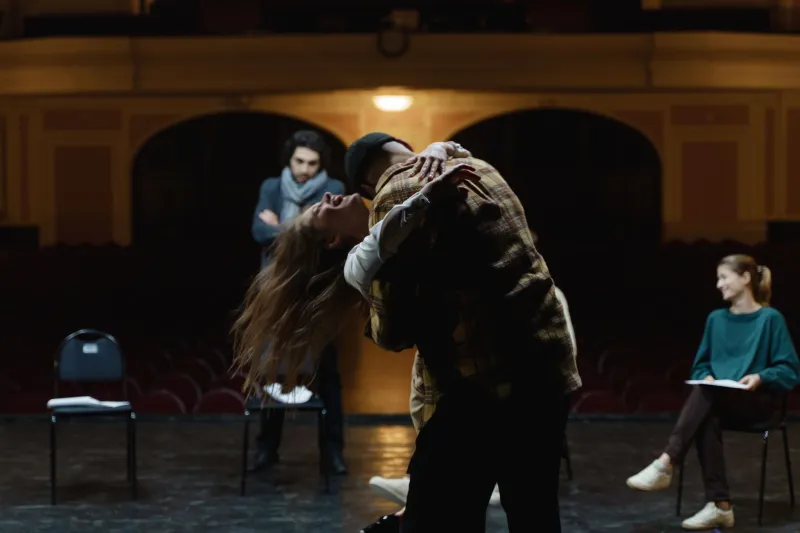
There is a particular quality to the silence that descends on a Broadway stage in the hours before opening night. It is not the silence of rest. It is the silence of an organism that has been pushed to the edge of its capacity and is now, in the final moments before the decisive performance, attempting to absorb everything that has come before. The performers standing in that silence have spent the preceding weeks in a state of near-continuous reconstruction — learning new lines, adjusting blocking, incorporating notes from directors who are themselves operating under conditions of considerable duress. They have done all of this in front of paying audiences. They have done it under the knowledge that the critics are watching, evaluating, preparing the verdicts that will determine whether their production survives.
This is the preview period. And for many of the people who endure it, it represents Broadway's most demanding and least glamorous institution.
The Architecture of Anticipation
The preview system, as it currently operates on Broadway, serves a specific and ostensibly reasonable purpose: to allow a production to refine itself in front of live audiences before the formal critical evaluation that opening night initiates. In theory, previews provide the creative team with invaluable information about what is and is not working — information that can only be gathered from the unpredictable chemistry of a full house.
In practice, the preview period has evolved into something considerably more complex. The number of preview performances before a Broadway opening night varies widely: some productions open after as few as two or three previews, while others have run extensive preview periods lasting several weeks or even months. The variables that determine this timeline include the producer's financial position, the production's technical complexity, and — increasingly — the strategic calculation of when a particular show is most likely to receive favorable critical attention.
What has remained constant, regardless of the length of the preview period, is the intensity of the experience for those inside it.
The Human Cost of the Countdown
Performers who have spoken candidly about the preview period — typically in retrospective interviews, rarely in the moment — describe a particular quality of psychological pressure that distinguishes it from any other phase of theatrical production. During rehearsals, the work exists in a protected environment: changes can be made without consequence, failures can be acknowledged and corrected without an audience present to register them. During the run proper, the production has achieved a settled form; the work of the performer becomes one of maintenance and renewal rather than fundamental reconstruction.
The preview period inhabits neither of these relatively stable states. It is a phase of continuous, public revision — a condition that demands of performers the contradictory skills of committed execution and simultaneous openness to change. An actor must deliver a scene with full conviction at eight o'clock on a Tuesday evening and then receive notes at eleven that require them to approach the same scene from an entirely different emotional direction on Wednesday.
The physical demands compound the psychological ones. Broadway performers typically execute eight shows per week, a schedule that is itself taxing under ordinary circumstances. During previews, that schedule may be supplemented by additional rehearsals, stumble-throughs, and technical sessions that extend the working day well beyond what the performance schedule alone would require. Injuries sustained during this period carry an additional weight: the preview period offers no meaningful opportunity for recovery.
Economics and the Compressed Timeline
The economic logic that shapes the preview period is, from the producer's perspective, straightforward and largely inescapable. A Broadway production begins generating operating costs the moment it moves into its theater. The weekly overhead for a large musical — theater rental, company salaries, marketing expenses — can easily exceed a million dollars. Every week of previews represents a week during which the production is spending at the rate of a running show while operating under the conditions of a production still in development.
The incentive to open quickly is therefore substantial, and it operates in direct tension with the creative team's interest in having sufficient time to address whatever the preview period reveals. This tension is not new, but it has been intensified by the escalating cost structure of contemporary Broadway production, where capitalization budgets routinely reach eight figures and the financial consequences of a negative critical reception are immediate and severe.
Some producers have responded by extending preview periods strategically — not to give the creative team more time, but to build audience and critical momentum before the formal opening. A production that generates significant word-of-mouth during a long preview run arrives at opening night with a pre-existing narrative of success, one that can influence critical perception in ways that are subtle but not insignificant.
The Quiet Rebellion
A growing number of Broadway productions have begun experimenting with approaches to the preview period that prioritize the wellbeing of the company over the conventional timeline. Extended preview runs — some lasting six to eight weeks — have allowed creative teams to make more measured adjustments, giving performers the stability of a relatively settled production before the critical scrutiny of opening night arrives.
Other productions have adopted formal policies limiting the number of changes that can be implemented after the first week of previews, creating an artificial stability that allows the company to consolidate its work rather than perpetually revising it. The approach is not universally popular among directors and writers who regard the preview period as their last opportunity for meaningful creative intervention, but it has found advocates among performers and stage managers who have experienced the human cost of the alternative.
The Coronation and Its Price
Opening night on Broadway retains its ceremonial power precisely because of what precedes it. The celebration that follows a successful opening — the party, the flowers, the reviews arriving on smartphones as the champagne is poured — carries the weight of everything the company has endured to reach that moment. It is a coronation, and like all coronations, it derives its meaning from the ordeal that has preceded it.
At Tsar Folies, we celebrate the magnificent productions that Broadway produces with genuine admiration. But magnificence, as any honest observer of the theatrical industry will acknowledge, is purchased at a price — and that price is paid, in the first instance, not by producers or critics or audiences, but by the performers who stand in the silence before the curtain rises, carrying the full weight of a production that is not yet finished, before an audience that does not know it, on a stage where everything is always, always at stake.