Subjects No More: How American Theater Is Inviting Its Audiences to Claim the Stage

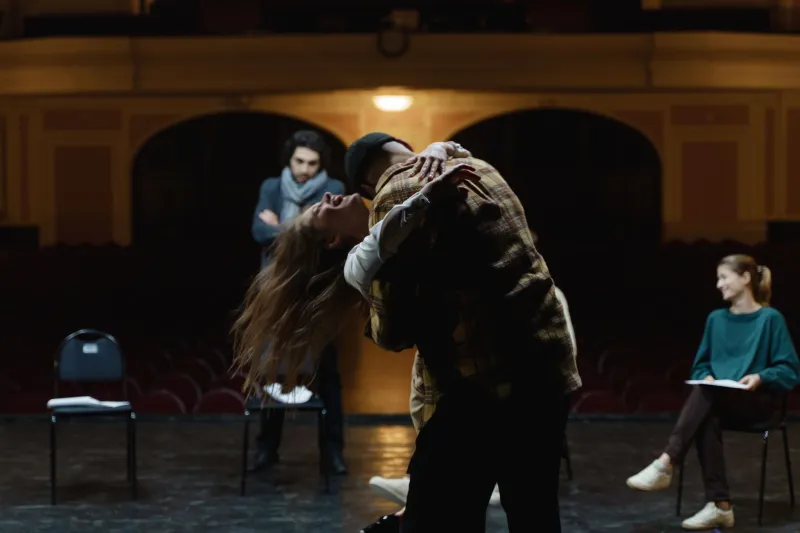
For most of theater's long history, the arrangement has been straightforward: performers occupy the stage, audiences occupy the seats, and an invisible but absolute boundary separates the two. This division was not merely architectural — it was philosophical, a codified understanding of who holds power in the theatrical transaction. The performer reigns; the audience observes.
That arrangement, centuries in the making, is being dismantled — and American audiences are the ones demanding the demolition.
The Shift in Expectation
It would be too simple to attribute the rise of immersive theater entirely to any single cultural moment or technological development. The roots run deeper than social media, deeper even than the immersive dining experiences and escape rooms that have proliferated across American cities over the past decade. What is driving this shift is something more fundamental: a widespread recalibration of what an evening out is for.
Americans — particularly the younger generations who represent theater's most urgently courted demographic — have grown up in an environment that prizes participation over passive consumption. Streaming platforms offer control over narrative pacing. Video games place the player at the center of epic stories. Social media rewards those who perform their own lives for an audience. Against this backdrop, the traditional theatergoing experience — sit down, stay quiet, applaud at the appropriate moments — can feel, to the uninitiated, like an oddly passive way to spend a Saturday evening.
Immersive and interactive theater answers this expectation not by cheapening the art form, but by expanding its possibilities.
What Immersive Theater Actually Means
The term "immersive theater" has acquired a certain elasticity in recent years, applied to experiences ranging from the genuinely transformative to the merely gimmicky. At its most rigorous, immersive theater dissolves the fixed relationship between performer and audience member, inviting guests to move through a physical environment, make choices that influence their experience, and encounter narrative from a perspective that is irreducibly personal.
The Sleep No More phenomenon, which has run in New York since 2011, remains the most widely cited American example — a production in which masked audience members wander freely through a multi-story environment, following performers through a loose Macbeth-derived narrative at their own pace and by their own choices. No two audience members experience the same evening. The production's creators, the British company Punchdrunk, understood something essential: that the act of choosing where to look, whom to follow, which door to open, transforms a spectator into something closer to a protagonist.
That insight has inspired a generation of American theater-makers.
The Architecture of Participation
Designing an immersive theatrical environment is an exercise in spatial storytelling — one that demands as much attention to architecture, lighting, and sensory detail as to script and performance. The spaces themselves must function as characters, offering audiences not merely a backdrop but a world with its own internal logic, its own secrets, its own rewards for the curious.
Producers and designers working in this mode speak frequently of the concept of agency — the degree to which an audience member genuinely feels that their choices matter. A space that merely places performers and spectators in closer physical proximity without offering meaningful interactivity is not truly immersive; it is simply intimate. The distinction matters enormously to audiences who arrive with genuine expectations of participation.
Across American cities, theaters are investing in the physical transformation of their venues to support these expectations. Flexible black-box spaces are being reconfigured to eliminate fixed seating arrangements. Historic venues are incorporating promenade-style staging that allows audiences to follow the action through multiple rooms. Even some larger Broadway houses are experimenting with productions that build audience interaction directly into their staging.
The Psychology of Being Chosen
There is a particular pleasure — one that borders on the regal — in being singled out within a theatrical experience. Immersive productions frequently deploy this device: a performer who makes direct eye contact, whispers something privately, or extends a hand to draw a single audience member into a scene. The effect is disproportionate to its simplicity. To be chosen, even briefly, within the context of a grand theatrical narrative is to feel, however fleetingly, that one is not merely watching history but participating in its making.
Theater psychologists and audience researchers have noted that these moments of individual acknowledgment generate unusually strong emotional memories. Patrons who have been personally engaged within a performance are significantly more likely to return, to recommend the production to others, and to describe the experience in terms that suggest genuine transformation rather than mere entertainment.
This is not manipulation — or not only manipulation. It is the fulfillment of a very old human desire: to matter within the story.
Regional Theaters Lead the Charge
While New York commands the most attention, some of the most adventurous work in immersive and interactive theater is being developed outside of Manhattan. Regional companies in Chicago, Los Angeles, Portland, and Austin have embraced participatory formats with a creative freedom that the financial pressures of Broadway often preclude.
Chicago's theater ecosystem, in particular, has become a laboratory for audience-integrated work, with companies such as Third Rail Projects and locally rooted ensembles developing productions that use the city itself as a stage. Walking tours that become murder mysteries, warehouse spaces transformed into elaborate narrative environments, site-specific performances staged in public parks and transit stations — all of these represent a theater that has moved decisively beyond the proscenium.
For audiences in these cities, the experience of interactive theater has become less a novelty and more an expectation — a standard against which more conventional productions are increasingly, and not always favorably, measured.
Preserving the Art Within the Experience
Not everyone in the theatrical community regards this shift with uncomplicated enthusiasm. Directors and playwrights who have devoted their careers to the crafted, authored experience of traditional theater worry that the pursuit of audience agency can come at the cost of narrative coherence, emotional depth, and the kind of carefully controlled dramatic arc that only a fixed structure can provide.
These concerns are not without merit. Immersive theater done poorly can feel like an expensive haunted house — atmospheric without substance, stimulating without meaning. The challenge for producers and designers is to honor both the audience's desire for participation and the production's obligation to offer something genuinely worth participating in.
The finest immersive work achieves this balance by treating audience agency not as an end in itself, but as a vehicle for a deeper engagement with theme, character, and story. When it works — when an audience member emerges from an interactive production having genuinely grappled with something — the effect is unlike anything that a conventional theater experience can produce.
The Coronation of the Audience
There is something fitting about the fact that American theater, born of a democratic cultural tradition, should be moving toward a form that places the audience at its center. The spectator who was once merely a subject of the theatrical court is being invited, at last, to take a seat closer to the throne.
The theaters that understand this shift — and that invest in the artistry, the spatial design, and the performer training required to make it meaningful — are the ones that will define what American theatrical culture looks like in the decades ahead. They are building not merely audiences, but participants. Not merely patrons, but collaborators in the grand, unfolding narrative of the stage.