Before the Curtain Rises: America's Grandest Theater Lobbies Are Stealing the Show
For centuries, the theater lobby served a singular, utilitarian purpose: a holding chamber between the cold outdoors and the velvet warmth of the auditorium. One collected a program, surrendered a coat, and waited. The performance, it was understood, began when the curtain parted.
That understanding is now magnificently obsolete.
Across America's most distinguished performing arts venues, the pre-show experience has undergone a transformation so thorough, so deliberate, and so visually arresting that many patrons arrive early not out of obligation, but out of genuine desire. The lobby, the lounge, the grand staircase — these are no longer architectural afterthoughts. They are, in every sense that matters to Tsar Folies, the opening act.
The Architecture of Anticipation
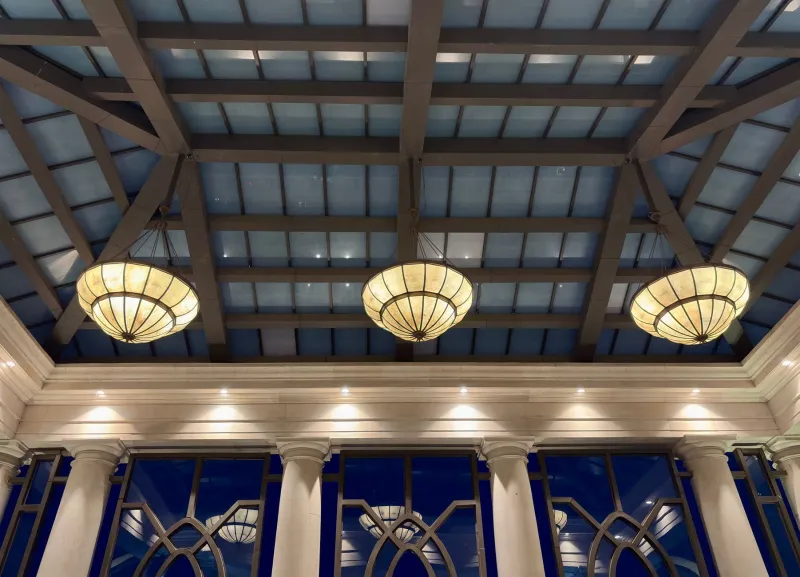
Consider what a truly commanding lobby communicates before a single word is spoken or a single note is played. At the Kennedy Center in Washington, D.C., the Grand Foyer — stretching 630 feet in length and lit by eighteen Orrefors crystal chandeliers gifted by Sweden — does not merely welcome guests. It envelops them. The sheer verticality of the space, the deliberate excess of light and proportion, initiates a psychological shift in the visitor. One does not simply enter; one is received.
This distinction — between entering a building and being received by one — lies at the heart of what America's most ambitious theater operators are now engineering. Venues from the Adrienne Arsht Center in Miami to the Segerstrom Center for the Arts in Costa Mesa, California, have invested substantially in lobby redesigns that prioritize what hospitality professionals call the "arrival narrative": the sequential, curated experience of transitioning from the ordinary world into something elevated.
Architectural firms specializing in cultural spaces increasingly speak of lobbies in theatrical terms — as prosceniums of their own, framing the patron as protagonist. Soaring ceilings, locally commissioned art installations, and materials selected for their tactile richness (polished marble, brushed brass, hand-laid mosaic) all serve to signal that one has crossed a threshold into a realm where aesthetic standards are non-negotiable.
The Ritual of Arrival
Beyond architecture, forward-thinking venues are choreographing the arrival experience itself with the precision one might expect from a seasoned stage director. Valet services at premier theaters in cities like Chicago, Los Angeles, and New York have evolved well beyond the transactional. Staff in tailored livery greet patrons by name when reservation data allows. Digital check-in kiosks are being replaced — or elegantly supplemented — by dedicated concierge desks staffed by individuals trained in the traditions of luxury hospitality.
At the Winspear Opera House in Dallas, part of the AT&T Performing Arts Center, the experience of walking the red-canopied entry during a warm Texas evening has been described by regular patrons as genuinely ceremonial. The venue's distinctive disc-shaped canopy, designed by Foster + Partners, creates a sense of processional passage — a visual and spatial grammar that tells the body, before the mind fully registers it, that something significant is about to occur.
This calibration of expectation is not accidental. It is the product of extensive study into how physical environments shape emotional readiness. Theaters that understand this invest accordingly.
The Rise of the Exclusive Pre-Show Lounge
Perhaps no development more clearly signals the luxury ambitions of contemporary American theater than the proliferation of exclusive pre-show lounges — intimate, often membership-gated spaces that offer curated food and beverage programs, private seating, and an atmosphere deliberately removed from the general concourse.
The Metropolitan Opera's Belmont Room in New York remains a benchmark in this category: a private dining and reception space reserved for donors and subscribers, where the evening's program is framed by fine wine and conversation among the culturally devoted. But the model has spread well beyond the grand institutions of the East Coast.
In San Francisco, the War Memorial Opera House has long maintained donor lounges that offer sweeping views of the Civic Center plaza. In Houston, the Wortham Theater Center provides premium patrons with access to pre-curtain receptions that incorporate live musical performances — essentially staging a secondary, intimate performance within the performance evening itself.
These spaces operate on a principle Tsar Folies finds deeply resonant: that the theater experience, at its most refined, should be total. It should claim the entire evening, not merely the ninety or one hundred twenty minutes between curtain and bow.
Food, Drink, and the Theater of Taste
The culinary dimension of the pre-show experience has matured considerably. The era of the plastic cup of indifferent chardonnay purchased from a folding table is, at America's premier venues, firmly behind us. In its place, partnerships with celebrated chefs and mixologists have produced lobby bars and pre-function dining experiences that would not embarrass a four-star restaurant.
The Steppenwolf Theatre in Chicago has cultivated a lobby bar program that changes seasonally, reflecting both the productions on stage and the produce available to local suppliers. The Goodman Theatre, also in Chicago, has collaborated with neighboring hospitality establishments to create pre-show dining packages that extend the theatrical ritual outward into the city itself.
In Los Angeles, the Music Center has embraced the outdoor California climate to expand its pre-show hospitality onto terraces and plazas, offering patrons the opportunity to dine beneath the open sky before descending into the auditorium. The transition from alfresco elegance to enclosed grandeur becomes, in this configuration, its own form of theatrical reveal.
Why It Matters: The Case for the Complete Evening
One might reasonably ask whether all of this represents genuine cultural enrichment or merely the theater industry's capitulation to the hospitality economy. The answer, upon consideration, is that the distinction is less meaningful than it first appears.
Theater has always been a social art form. The Greek amphitheater was a gathering place before it was a performance venue. The Elizabethan playhouse was raucous, communal, and thoroughly embedded in the social fabric of the day. The formalization of the theater lobby — its elevation into a space of genuine beauty and intentional experience — is not a departure from theatrical tradition. It is, in many respects, a return to theater's roots as a total social occasion.
When a patron steps into a lobby that has been designed with the same care given to the stage itself, something important is communicated: that their presence is valued, that their evening is worthy of ceremony, that the institution they have chosen to support regards beauty and hospitality as inseparable from artistic excellence.
At Tsar Folies, we have always believed that a royal affair does not begin when the orchestra strikes its first chord. It begins the moment one decides to attend — and it is sustained, or squandered, in every detail that follows. America's finest theaters are beginning to understand this with admirable clarity. The lobby, long overlooked, has finally claimed its crown.