Old Words, New Stages: How American Regional Theater Is Reinventing the Classic Canon
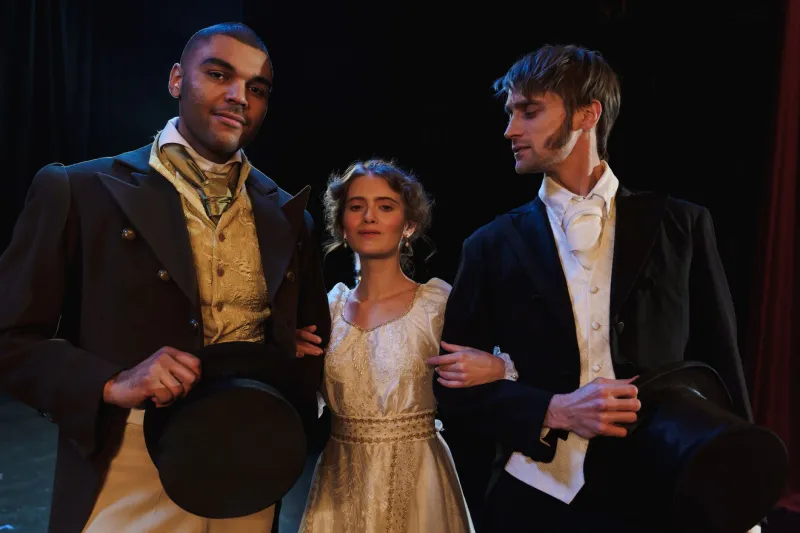
There is a particular kind of theatrical electricity generated when something ancient becomes suddenly, unexpectedly immediate. When a line written four centuries ago lands in a contemporary American ear with the force of a headline — when a character conceived in Elizabethan England feels, without apology or explanation, like someone you might know — the theater has accomplished something that no other art form can quite replicate.
This electricity is coursing through American regional theater with unusual intensity right now. Across the country, from Atlanta to Anchorage, from Louisville to Los Angeles, companies are staging canonical works — Shakespeare, Chekhov, Ibsen, O'Neill — in ways that are deliberately, sometimes provocatively, rooted in the American present. The results are productions that have drawn new audiences, ignited critical debate, and confirmed that the classics, far from being museum pieces, remain dynamically alive in the hands of directors willing to treat them as such.
The Case for Radical Reimagination
To understand why regional theater companies are pursuing bold reinterpretations with such commitment, one must first understand the pressures they face. Unlike Broadway, which can rely on the gravitational pull of tourism, celebrity casting, and national media coverage, regional companies depend on cultivating and retaining local audiences year after year. A subscription base built primarily on older, predominantly white patrons — a demographic reality that many regional theaters have candidly acknowledged — is not a sustainable foundation for the long term.
Reimagination, when executed with genuine artistic intelligence, addresses this challenge without abandoning the repertoire that defines these institutions. It asks not that the classics be discarded, but that they be reopened — examined for what they contain that speaks to audiences who may not have previously seen themselves reflected in the theater's traditional mirror.
The Alabama Shakespeare Festival, based in Montgomery, has built a distinguished reputation on exactly this premise. Productions that situate Shakespearean narratives within the cultural and geographical context of the American South — drawing on the region's complex histories of power, land, family, and race — have generated both critical acclaim and demonstrably broader audience engagement. When the landscape of King Lear becomes recognizably Southern, the play's meditations on inheritance and betrayal acquire a specificity that universalizes rather than diminishes them.
Shakespeare's American Dialects
No playwright has proven more receptive to American reinvention than Shakespeare, and no region of the country has proven more fertile ground for such reinvention than the American South. The structural resonances are difficult to ignore: hierarchies of class and family, the weight of historical sin, the rhetoric of honor — these themes, so central to Shakespeare's tragic imagination, find vivid analogues in Southern American life and literature.
Directors working in this vein are careful to distinguish their approach from mere novelty. "We are not updating Shakespeare to make him hip," one regional artistic director explained in a recent interview. "We are locating him. We are asking where in America these stories already live, and then we are going there."
The Oregon Shakespeare Festival in Ashland, one of the largest and most respected regional Shakespeare institutions in the country, has pursued this philosophy with particular rigor. Its American Revolutions initiative — commissioning new American plays alongside its classical programming — has created a dialogue between the Shakespearean canon and contemporary American voices that enriches both. Productions have emerged from this initiative that feel simultaneously ancient and urgently present, honoring the formal architecture of Shakespeare's dramaturgy while populating it with American specificity.
Chekhov in the Rust Belt, Ibsen in the Midwest
The reimaginative impulse extends well beyond Shakespeare. Chekhov's elegies for a dying aristocracy have found unexpected new life when transplanted to the American Midwest and rust belt, regions that have experienced their own particular forms of industrial and social decline. Productions of The Cherry Orchard set against the backdrop of a family farm facing foreclosure, or Three Sisters relocated to a fading Ohio manufacturing town, have struck audiences as revelatory rather than forced.
The logic is sound. Chekhov's characters are people who cannot adapt to change they can see coming — people who mourn a world that is already gone while failing to construct the new one that must replace it. This condition is not uniquely Russian, and American regional theater has been right to claim it.
Ibsen, whose dramas of social hypocrisy and constrained individual freedom defined Scandinavian theater in the nineteenth century, has proven similarly transportable. Productions of A Doll's House and Hedda Gabler set in contemporary American suburbs — where the architecture of respectability can be just as imprisoning as anything Ibsen imagined — have found receptive audiences in regional markets from Minneapolis to Nashville.
The Question of Casting
No discussion of canonical reimagination in American regional theater can proceed without addressing the transformative role of casting. The decision to cast actors of color in roles historically portrayed by white performers is not, at its most thoughtful, a political gesture — it is a dramaturgical one. It asks what the play contains that transcends the racial assumptions of its original context, and it answers by demonstrating that the answer is nearly everything that matters.
The Guthrie Theater in Minneapolis, a flagship institution of American regional theater, has pursued color-conscious and color-blind casting with notable consistency, producing classical works in which the diversity of the company reflects the diversity of the world the plays describe, if not always the world in which they were written. The effect, for audiences willing to receive it, is frequently to render the plays more rather than less universal — to strip away the period costuming of racial exclusivity and reveal the human architecture beneath.
Similarly, productions featuring LGBTQ+ casting and directorial perspectives have found that the classics contain more flexibility than their historical reception might suggest. A Twelfth Night in which the play's gender fluidity is treated not as comic confusion but as genuine inquiry into identity has, at several regional companies, proven to be among the most commercially and critically successful productions in recent memory.
The Audience Responds
What is perhaps most striking about this moment in American regional theater is not the boldness of the productions themselves — bold productions have always existed — but the breadth of the audience response. Demographic data from several regional companies indicate that reimagined classical productions consistently attract younger and more diverse audiences than traditional stagings, without significantly alienating established subscriber bases when the work is executed with evident craft and intelligence.
This suggests something that Tsar Folies has long suspected: that the appetite for theatrical grandeur in America is broader and more varied than the industry has historically assumed. Audiences do not require familiar settings or familiar faces to engage with great dramatic writing. They require only that the theater treat them as intelligent participants in a living art form — one capable of speaking to their lives with the same force it brought to the lives of audiences four hundred years ago.
A Canon Fit for a New Court
The American regional theater's engagement with the classical canon is not, at its best, an act of appropriation or demolition. It is an act of stewardship — the recognition that these works belong to whoever is willing to inhabit them fully and honestly, and that the greatest service one can render to a masterpiece is to keep it dangerously alive.
The courts of Shakespeare's imagination were places of power, intrigue, beauty, and consequence. American regional theater, at its most ambitious, is building new courts of its own — ones that look and sound like the country they serve, and that invite every American into the royal drama of the human condition. The canon, it turns out, has room for all of us. It always did.