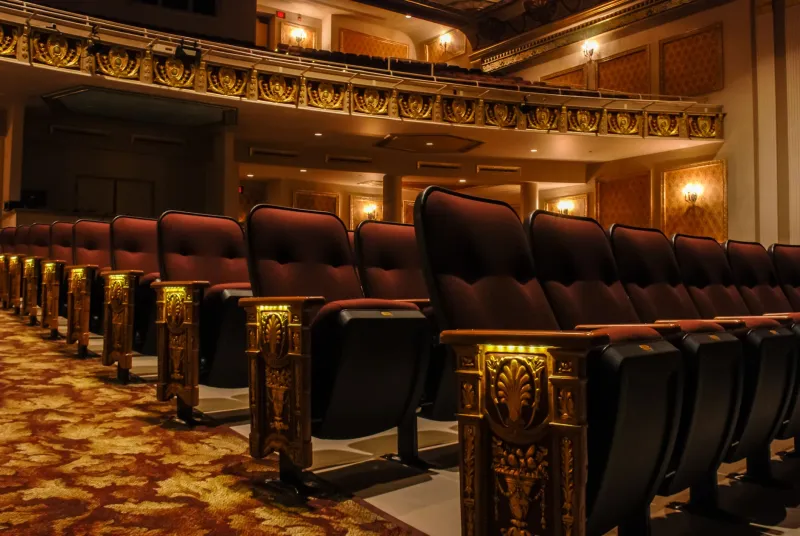
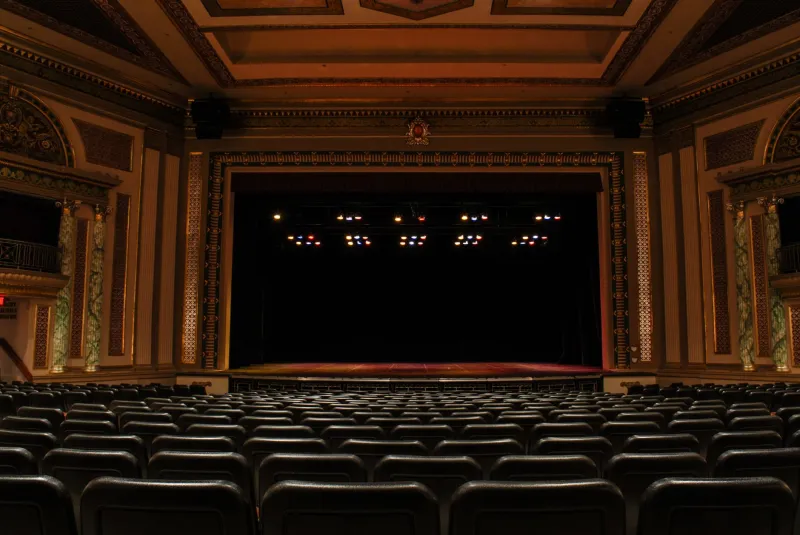
The Stage Translated: When Theatrical Grandeur Crosses Into the Streaming Age
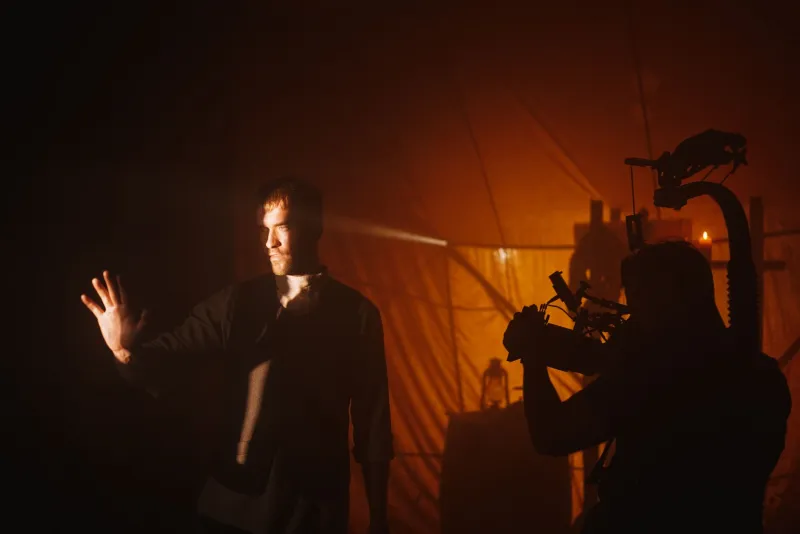
There is a particular kind of magic that belongs exclusively to the live theater — the collective held breath before a revelation, the warmth of a house full of strangers sharing a single emotional moment, the knowledge that what unfolds cannot be rewound or paused. For more than a century, that irreducible quality was considered theater's greatest argument for its own indispensability. It was also, some believed, its greatest vulnerability.
Yet something unexpected has been unfolding at the intersection of the stage and the screen. A growing number of major theater companies, independent producers, and streaming platforms have begun treating the adaptation of theatrical productions not as a compromise, but as a creative frontier — one with its own aesthetic rules, its own possibilities for grandeur, and its own capacity to carry the regal spirit of live performance into an entirely different medium.
Beyond the Single Camera: A New Vocabulary for Theatrical Adaptation
The earliest attempts to bring stage productions to television were largely documentary in ambition: a fixed camera positioned at the rear of the orchestra, capturing the performance from a respectful but uninspired distance. The result, however faithful to the original staging, tended to produce something that satisfied neither the theater lover nor the casual viewer — too static for the screen, too mediated for the house.
What distinguishes the current generation of theatrical adaptations is a willingness to treat the screen version as a distinct artistic work rather than a facsimile. Directors brought in to helm these productions are increasingly those with fluency in both worlds — individuals who understand the grammar of cinema while holding genuine reverence for theatrical craft. The camera, in their hands, becomes not a passive witness but an active interpreter.
The National Theatre Live program, which has brought British theatrical productions to American cinema screens and streaming platforms with considerable success, demonstrated early on that audiences would respond to this approach. Productions filmed with multiple cameras, carefully choreographed to capture the nuance of performance that a distant seat might obscure, felt less like recordings and more like experiences. The distinction proved commercially and critically significant.
Which Productions Have Made the Crossing Successfully
Not every stage production translates with equal grace. Productions that rely heavily on the physical relationship between performer and audience — the shared air, the palpable energy of a full house — tend to lose something essential in translation, however skillfully the camera work is executed. Immersive or site-specific work, by its nature, resists the frame.
Conversely, productions built around extraordinary performances, intricate text, or visually opulent design have often found that the screen amplifies rather than diminishes their power. The close-up, unavailable to any theatergoer beyond the first few rows, becomes a revelation — a means of accessing the interiority of a performance that live audiences can sense but rarely see with such precision.
Hamilton's arrival on Disney+ in 2020 — a filmed version of the original Broadway cast's performance, produced with a level of cinematic intentionality unusual for the genre — became a cultural moment that reframed the conversation entirely. Here was a production that millions of Americans had been unable to see on stage, now accessible in their homes in a version that felt crafted rather than captured. Its reception suggested an audience far larger than Broadway's physical capacity, waiting to be reached.
More recently, productions from regional powerhouses including the American Repertory Theater and the Steppenwolf Theatre Company have partnered with streaming platforms to produce prestige adaptations that carry the aesthetic ambition of the original stage work into a cinematic register. The results have varied, but the most successful share a common quality: they do not apologize for their theatrical origins. They celebrate them.
The Design Dimension: Spectacle That Translates
For those whose passion for theater is inseparable from its visual dimension — the set designs that transform bare stages into entire worlds, the lighting that sculpts space and emotion simultaneously, the costume work that places a character in their moment before a word is spoken — the streaming adaptation presents both a challenge and an opportunity.
The challenge is obvious: the scale and texture of theatrical design, experienced in a live house, has a physicality that no screen fully replicates. The opportunity is subtler. The camera can linger on details that even the most attentive live audience member might miss — the embroidery on a period costume, the deliberate imperfection in a painted flat, the precise angle at which a light strikes a performer's face.
Production designers working on high-budget theatrical adaptations speak of the process as a kind of translation — not word-for-word, but meaning-for-meaning. Certain visual choices made for the stage must be reconsidered for the screen; others, surprisingly, gain new power in the transition. The regal extravagance of a great theatrical production, it turns out, can survive the journey — provided those making the crossing understand both the language they are leaving and the one they are entering.
What Industry Voices Are Saying
Directors and producers engaged with this space tend to speak with cautious optimism about what the streaming adaptation movement means for live theater's long-term health. The fear that filmed productions will cannibalize live attendance has not been borne out by evidence; if anything, several producers report that high-profile streaming releases have driven renewed interest in live productions, particularly among younger audiences encountering a work for the first time on screen.
"The screen version is an invitation," observed one director whose stage production was recently adapted for a major streaming platform. "It shows the audience the world we built. The live theater shows them what it feels like to stand inside it."
Industry analysts note that the economics of theatrical adaptation, once considered marginal, have become genuinely attractive. A production that recoups its investment through a Broadway or touring run and then generates additional revenue through a streaming partnership represents a model that extends a production's life and broadens its audience without diminishing the prestige of either version.
A Kingdom With More Than One Court
The relationship between stage and screen has always been complicated — competitive, occasionally hostile, and perpetually fascinating. What the current moment suggests is that the most vital theatrical productions need not choose between the two. The grandeur of a great performance, the regal spectacle of a world-class production, has proven itself capable of holding court in multiple rooms at once.
For audiences who have always believed that theater deserves to be experienced rather than merely viewed, the streaming adaptation at its finest offers something genuinely new: not a substitute for the live occasion, but a different kind of royal audience — one granted not in a great house on a winter evening, but in the quieter sovereignty of one's own home.