Palaces of Silence: A Journey Through America's Most Breathtaking Abandoned Theaters
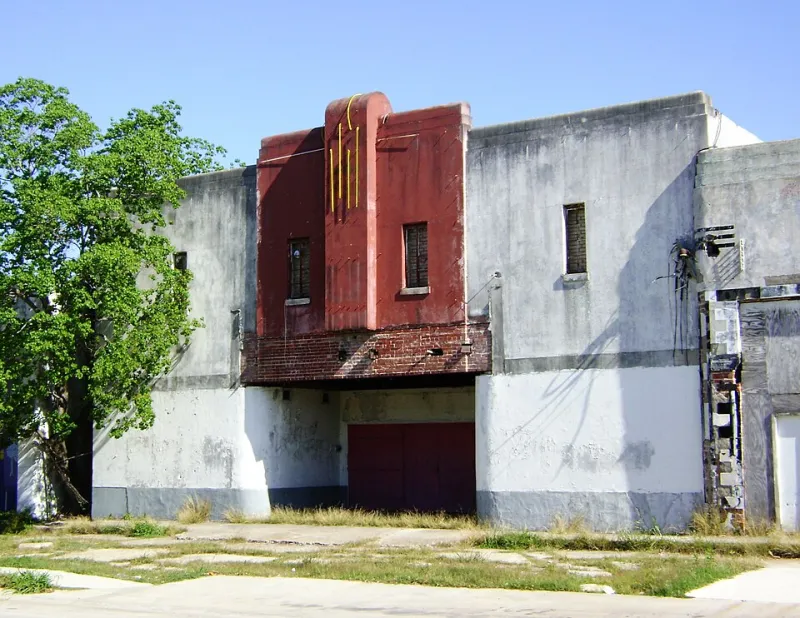
Photo: Patrick Feller, CC BY 2.0, via Wikimedia Commons
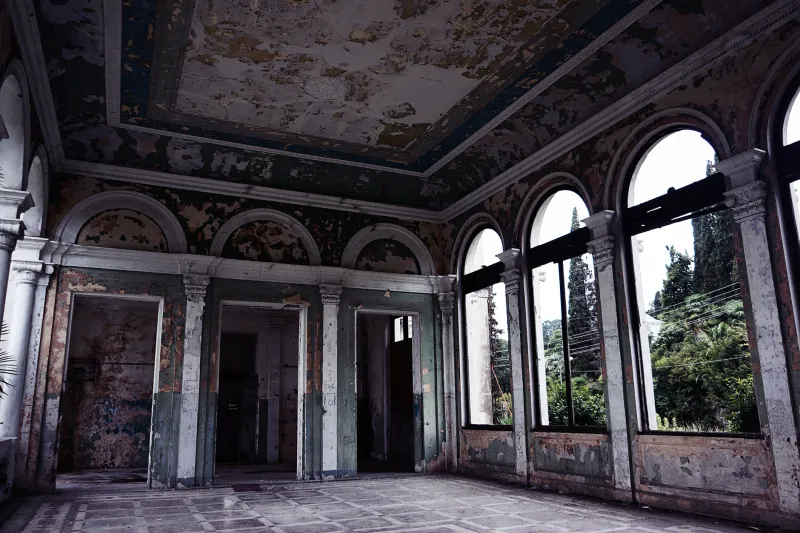
There is a particular quality of silence that inhabits an abandoned theater—one that feels nothing like ordinary quiet. It is a silence saturated with memory, thick with the accumulated presence of audiences who once filled every seat, of orchestras that once tuned in the pit, of performers who once waited in the wings with pounding hearts. To stand in the center of a derelict American theater is to experience something that resists easy categorization: a form of architectural grief, perhaps, or a confrontation with the impermanence of even the most magnificent human constructions.
Across the United States, hundreds of theaters have arrived at precisely this condition. Some were grand movie palaces of the 1920s, built during an era when civic leaders competed to construct the most opulent entertainment venues their cities could finance. Others were legitimate theaters and opera houses that predated cinema entirely, erected in the confident belief that culture required a temple worthy of its aspirations. Still others were neighborhood venues—smaller in scale but no less significant to the communities they served—that fell victim to demographic shifts, economic downturns, and the relentless expansion of home entertainment.
All of them are now silent. And all of them, in their silence, speak with extraordinary eloquence.
The Architecture of Ambition
To understand what has been lost in America's abandoned theaters, one must first appreciate what was built. The theater construction boom of the late nineteenth and early twentieth centuries produced buildings of staggering ambition—structures designed not merely to house performances but to communicate something essential about the communities that built them.
The architects commissioned for these projects drew from an extraordinary range of historical vocabularies. Moorish Revival theaters conjured the palaces of Andalusia, their horseshoe arches and intricate tilework transporting audiences to a world utterly removed from the industrial cities surrounding them. Beaux-Arts houses arrived draped in classical authority—columns, pediments, and sculptural programs that declared theater a civic institution of the highest order. The atmospheric theaters of the 1920s, pioneered by architect John Eberson, installed artificial skies in their auditoriums: painted clouds, twinkling electric stars, and Mediterranean garden details that made audiences feel they were watching a performance beneath an open sky.
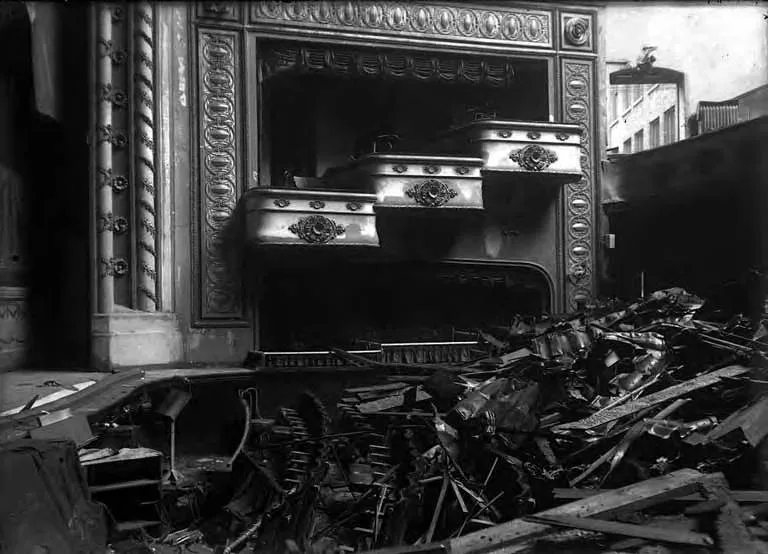
The Loew's Kings Theatre in Brooklyn, now magnificently restored after decades of abandonment, offers a glimpse of what these spaces looked like at their zenith—and what they became in their long decades of dereliction. With its French Baroque interior and a seating capacity of nearly 3,600, the Kings was among the most extravagant movie palaces ever constructed in America. When it closed in 1977, it entered a period of deterioration so complete that the ceiling eventually collapsed, birds colonized the upper balconies, and the gilded plasterwork that had once dazzled audiences dissolved under decades of water damage and neglect.
The Geography of Abandonment
Abandoned theaters are not distributed randomly across the American landscape. Their geography reflects the economic and demographic history of the country with uncomfortable precision. The Rust Belt cities of the Midwest—Detroit, Cleveland, Pittsburgh, Gary—contain concentrations of derelict theater architecture that serve as monuments to their industrial decline. Detroit alone possesses the Michigan Theatre, perhaps the most photographed abandoned theater in the world: a 1926 movie palace of extraordinary grandeur whose auditorium was converted into a parking garage, its ornate plasterwork and chandeliers now presiding over rows of automobiles in an image that has become emblematic of urban decay and architectural desecration.
The American South offers its own archaeology of theatrical abandonment. Small-town opera houses and community theaters, built during the optimistic decades following Reconstruction, now stand shuttered on main streets that have otherwise been transformed beyond recognition. Their facades—often the most architecturally ambitious structures in their communities—remain as evidence of a civic aspiration that the intervening century has not entirely extinguished.
In the Northeast, former vaudeville houses and legitimate theaters occupy urban neighborhoods whose populations have shifted dramatically since their construction. Buildings that once served as gathering places for specific immigrant communities—Italian opera houses on the Lower East Side, Yiddish theaters in the Bronx—carry within their walls a cultural history that their physical condition makes increasingly difficult to access.
The Preservationist's Crusade
Against this landscape of deterioration, a network of preservation advocates has been mounting what can only be described as a passionate and frequently exhausting campaign to rescue what remains. Organizations such as the League of Historic American Theatres have spent decades cataloguing endangered venues, lobbying for historic designation, and connecting preservation advocates with the financing mechanisms—historic tax credits, state preservation grants, philanthropic partnerships—that make restoration financially conceivable.
The restoration of a derelict theater is never a simple undertaking. The physical challenges are formidable: structural stabilization, hazardous materials remediation, the painstaking recreation of decorative elements that no longer exist in their original form. The financial challenges are equally daunting. A full-scale restoration of a large theater can cost tens of millions of dollars, and the economic case for such an investment requires a vision of programming, community engagement, and long-term management that many municipalities struggle to articulate.
And yet the successes are real and instructive. The Paramount Theatre in Oakland, California, a 1931 Art Deco masterpiece that had deteriorated into near-ruin, was restored in the 1970s and now operates as one of the finest performing arts venues on the West Coast. The Palace Theatre in Columbus, Ohio, closed for years and facing an uncertain future, underwent a meticulous restoration that returned it to active use as a premier entertainment destination. The Saenger Theatre in New Orleans survived both abandonment and the catastrophic flooding of Hurricane Katrina to emerge, after extensive restoration, as a centerpiece of the city's cultural infrastructure.
What the Ruins Remember
For those who visit America's abandoned theaters—and there exists a devoted community of urban explorers, architectural historians, and photography enthusiasts who do precisely this—the experience consistently produces a response that transcends ordinary aesthetic appreciation. The ruins communicate something about time, about community, and about the human need for shared experience that more intact environments cannot replicate.
The peeling paint on a theater's proscenium arch records the passage of decades with a fidelity that no historical account can match. The collapsed plasterwork reveals, in cross-section, the layers of renovation and redecoration that accumulated across a venue's active life. The remaining seats—those that have not been removed, stolen, or destroyed—retain the contours of the bodies that occupied them, maintaining a ghostly suggestion of the audiences that once filled the house.
In these details, the abandoned theater functions as a kind of archive: imperfect, deteriorating, and irreplaceable. Each year that passes without intervention narrows the window of possibility for restoration and deepens the loss that abandonment represents.
The Royal Ruin and Its Future
The abandoned theaters of America occupy a peculiar position in the national cultural landscape. They are simultaneously evidence of a remarkable tradition of civic investment in the performing arts and monuments to the fragility of that tradition. They document the ambition of communities that believed culture deserved a palace—and the subsequent decades in which those communities lost the capacity or the will to maintain what they had built.
The preservationists who fight for these buildings are not engaged in mere nostalgia. They are making an argument about what cities and towns owe to their own histories—about the obligation to steward the most ambitious artifacts of previous generations rather than simply allowing them to dissolve. It is an argument being made, with varying degrees of success, in communities across the country.
The silence in these palaces need not be permanent. It is, at its most hopeful, a pause—the held breath before the orchestra tunes, the moment before the lights descend, the instant of anticipation that precedes every great performance.