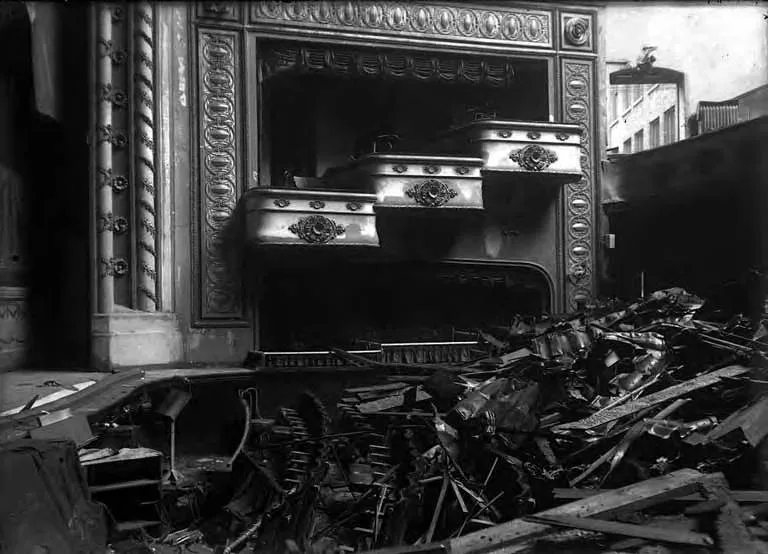
Resurrection and Ruin: The Passionate Crusade to Reclaim America's Forgotten Theater Palaces
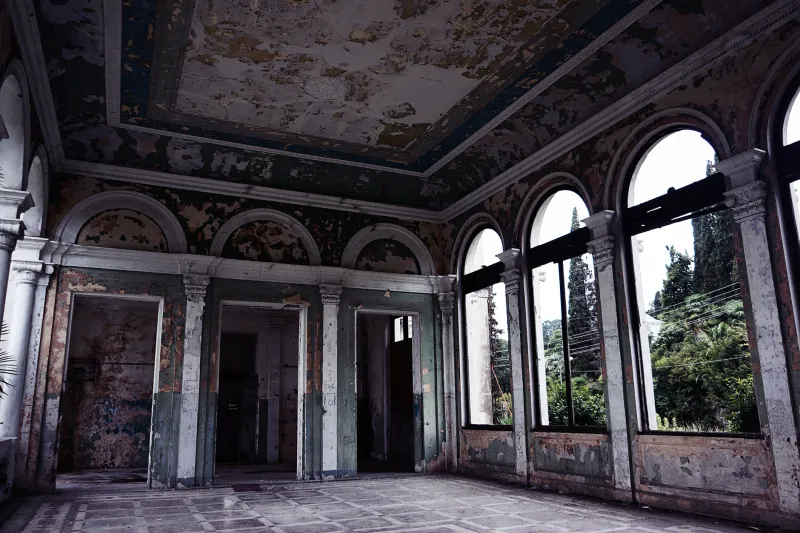
There is a particular quality of grief that belongs exclusively to ruined grandeur. The collapsed ceiling of a once-magnificent theater speaks a different language than ordinary architectural decay—it carries within it the echo of applause, the memory of footlights, the accumulated emotional residue of thousands of evenings when ordinary people sat together in the dark and allowed themselves to be transported. To stand inside an abandoned American theater palace is to feel, with unusual acuity, the weight of what has been lost.
And yet across the United States, from the industrial cities of the Rust Belt to the historic downtowns of the Deep South, a movement is underway that refuses to accept that loss as permanent. The restoration of abandoned theaters has become one of the most compelling—and most contested—forms of cultural preservation in contemporary American life, drawing together architects and activists, historians and developers, community leaders and obsessive individuals who have devoted years, sometimes decades, to the resurrection of buildings that the market long ago declared irrelevant.
The Scale of the Abandonment
To appreciate the magnitude of the restoration effort, one must first reckon with the scale of what was lost. During the early and middle decades of the twentieth century, American cities constructed movie palaces and vaudeville houses and legitimate theaters at a rate that, in retrospect, seems almost incomprehensible. These were not modest structures. They were architectural declarations—buildings designed in the vocabulary of Baroque excess, Moorish fantasy, or Beaux-Arts splendor, intended to communicate to their communities that the act of gathering for performance was worthy of the most lavish built environment that local ambition and national craftsmanship could produce.
The Roxy in New York. The Michigan Theater in Detroit. The Orpheum circuits that stretched from San Francisco to New Orleans. The Fox theaters that planted their gilded flags in city after city across the American interior. At their peak, these buildings represented some of the most extraordinary interior spaces in the country—not merely as entertainment venues but as civic monuments, places where the democratic aspiration to beauty found its most accessible expression.
The collapse of the studio system, the rise of television, the flight of middle-class populations to the suburbs, and the subsequent disinvestment in urban cores combined to render most of these buildings economically unviable within the span of a single generation. Some were demolished. Many more were simply abandoned—left to deteriorate at whatever pace the elements and neglect could manage.
The Preservationists: Portraits of Obsession
The individuals who have devoted themselves to the restoration of these buildings do not, as a rule, fit any single profile. They include trained architects and self-taught historians, retired municipal employees and young urban planners, wealthy philanthropists and people of modest means who have committed resources they arguably cannot spare to causes that offer no financial return.
What unites them is something harder to quantify: a conviction that the buildings they are fighting for contain something irreplaceable, and that the communities surrounding them cannot afford to lose it.
In Detroit—a city whose story of urban abandonment and cultural resilience has been told many times, though rarely with sufficient complexity—the restoration of the Fox Theatre in the late 1980s stands as one of the foundational narratives of the American theater preservation movement. The building, which had deteriorated into a state of near-catastrophic disrepair, was rescued through a private investment of considerable scale and restored to a condition that many preservation experts regard as among the most faithful and technically accomplished in the country. Its reopening did not merely restore a building; it became a catalyst for a broader conversation about what Detroit's cultural infrastructure could be.
Less celebrated but no less instructive is the ongoing effort to restore the Loew's Kings Theater in Brooklyn—a project that required more than a decade of advocacy, multiple rounds of financing, and the sustained commitment of community organizations that refused to accept the building's dereliction as a permanent condition. When the Kings finally reopened in 2015 after a restoration that cost approximately ninety million dollars, it was received not merely as an architectural achievement but as a statement about the neighborhood's sense of its own worth.
What These Buildings Remember
The argument for theater restoration is frequently made in economic terms—and the economics are not negligible. Restored theaters generate employment, attract ancillary spending, and function as anchors for broader neighborhood revitalization. These arguments are legitimate and, in the context of municipal funding decisions, often necessary.
But they are not, ultimately, the arguments that move the people who do this work. The deeper case for theater restoration is cultural and, in a sense, psychological. These buildings are repositories of collective memory in a manner that few other architectural forms can claim. They were built to be shared—designed for the simultaneous experience of hundreds or thousands of people who arrived as strangers and left having participated in something communal. Their abandonment represents not merely the loss of a structure but the interruption of a civic practice.
"When a theater closes, the community loses a place where it was in the habit of gathering," observed one preservation architect who has worked on restoration projects in five states. "And when a community loses the habit of gathering, it loses something about its capacity to understand itself as a community. The building is never just the building."
The Battles That Remain
For every theater that has been successfully restored, several others remain in states of uncertainty—caught between the competing claims of preservation advocates, real estate developers, municipal governments, and the simple arithmetic of structural deterioration. The costs of restoration are formidable. A building that has been unoccupied for decades requires not merely cosmetic renewal but fundamental structural remediation, systems replacement, and the painstaking reconstruction of decorative elements that may no longer have living craftspeople capable of replicating them.
In cities where the economic case for preservation is most difficult to make—smaller industrial towns, mid-sized cities with limited philanthropic infrastructure—the fight is often conducted by individuals whose commitment has outlasted every reasonable expectation of success. They attend zoning meetings. They apply for grants. They organize community screenings in parking lots adjacent to the buildings they are trying to save. They document, photograph, and archive with the urgency of people who understand that they may be recording a final chapter rather than a prelude to renewal.
The Stage Awaits
And yet, with remarkable frequency, these efforts succeed. The history of American theater preservation is, in the aggregate, a history of improbable victories—of buildings declared beyond saving that were saved, of communities told they could not afford restoration who found a way to afford it, of the apparently irreversible reversed by the stubbornness of people who refused to accept the verdict.
The theaters that have been reclaimed from ruin do not merely host performances. They perform a function of their own—testifying, night after night, to the possibility of renewal. They stand as architectural arguments that what a community once valued need not be permanently surrendered to the forces of neglect and economic pressure. They remind their audiences, before the curtain rises on anything else, that the stage itself was worth fighting for.