The Return of Magnificence: How American Theater Is Embracing Extravagance Once More
There is a particular silence that falls over an audience the moment a truly spectacular set is revealed — not the polite hush of anticipation, but the involuntary, almost reverent stillness of people confronted with something genuinely breathtaking. That silence had grown rare on American stages for the better part of a decade. Designers were praised for their restraint, directors celebrated for their conceptual austerity, and producers quietly relieved that "less" had become an aesthetic virtue as much as a financial necessity. Now, that silence is returning — and with it, the splendor that commands it.
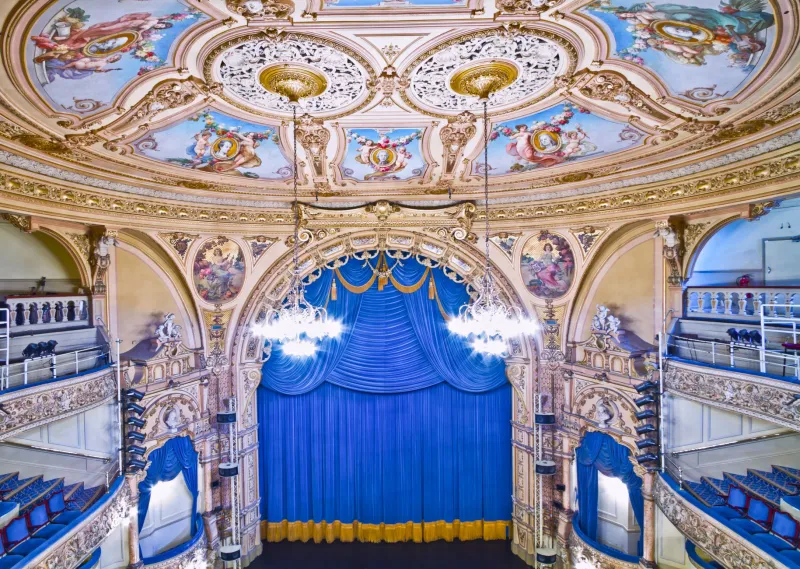
Across Broadway houses, regional flagships, and ambitious off-Broadway ventures, a decisive shift is underway. Productions are once again betting on the spectacular. Elaborate scenic constructions, layered period detail, hand-crafted ornamentation, and sheer visual density are reclaiming the stage with a confidence that reads less like nostalgia and more like a reckoning.
The Long Reign of the Bare Stage
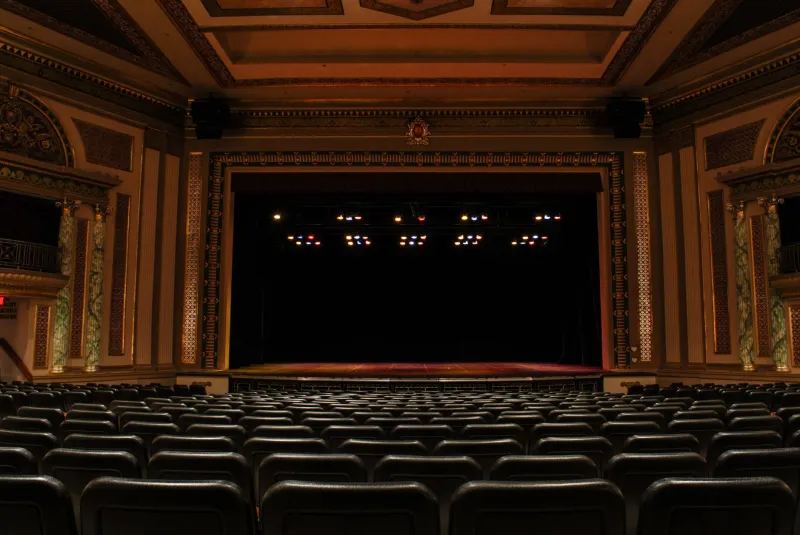
To understand why this resurgence feels so significant, one must appreciate how thoroughly minimalism had colonized the theatrical imagination. Beginning roughly in the early 2010s and accelerating through the latter half of the decade, stripped-down production design became not merely acceptable but fashionable — even morally coded. A bare stage with a single chair and a wash of light signaled intellectual seriousness. Elaborate scenery, by contrast, risked being dismissed as distraction, as spectacle for its own sake, as the province of tourists and commercial pandering.
The pandemic delivered what might have been the decisive blow. With productions shuttered, budgets gutted, and the entire industry forced to reckon with its financial fragility, the return to stages in 2021 and 2022 was understandably cautious. Smaller casts, simplified technical demands, and conceptual stagings that could be mounted without armies of scenic artists became the pragmatic norm. For a time, necessity and philosophy aligned neatly.
But audiences, it turns out, had been storing up an appetite that caution could not satisfy indefinitely.
Desire Deferred, Now Unleashed
Theater professionals who speak candidly about this moment describe a palpable shift in what audiences are seeking when they purchase a ticket. Theatergoers who endured years of isolation, who consumed content through screens of every dimension, who were denied the irreplaceable experience of live performance, have returned to their seats with heightened expectations rather than diminished ones. They want to be transported. They want to encounter something that cannot exist anywhere else — not on a streaming platform, not in a cinema, not in the domestic spaces where so much of recent life has been confined.
Grandeur, it turns out, is one of theater's most distinctly irreplaceable offerings. A vast scenic structure that fills a proscenium arch, a costume so intricately constructed that it registers differently from every seat in the house, a lighting design that transforms a stage into an entirely other world — these are experiences that no screen can replicate. Designers who had been quietly chafing against the minimalist orthodoxy now find themselves with both institutional permission and audience appetite to pursue the elaborate.
The Designers Leading the Charge
The current wave of opulent production design is not driven by a single aesthetic but rather by a shared willingness to commit — to invest labor, imagination, and resources into the visible surface of a production without apology. Scenic designers are once again building sets that require weeks of construction and teams of artisans. Properties departments are sourcing, fabricating, and aging objects with a specificity that rewards close attention. Costume shops are executing work of the kind that had, for a period, migrated almost exclusively to opera and ballet.
What distinguishes the best of this new extravagance from the excesses of an earlier era is intentionality. The most compelling productions currently mounting elaborate visual worlds are doing so in direct service of dramatic meaning. Grandeur, in these productions, is not ornament applied over a story but the very medium through which the story is told. A set that overwhelms the eye communicates something specific about power, about history, about the world a character inhabits. The spectacle and the substance are inseparable.
This is, in many respects, the philosophical inheritance of the great theatrical designers of the twentieth century — the understanding that the visual language of a production is itself a form of dramaturgy, capable of meaning-making that dialogue alone cannot achieve.
Producers Recalibrate the Risk
For producers, the return to elaborate production values represents a recalibration of risk rather than an abandonment of financial prudence. The calculus has shifted in ways that make investment in spectacle more defensible. Audiences demonstrably respond to it at the box office. Productions that offer genuinely immersive, visually extraordinary experiences generate the kind of word-of-mouth that sustains long runs and justifies premium pricing. In an era when theatergoing competes with an almost limitless array of entertainment options, the case for offering something genuinely singular has never been stronger.
There is also a cultural moment at work here. American audiences across demographics have demonstrated, in recent years, an enthusiasm for immersive and experiential entertainment that goes well beyond traditional theatrical contexts. Immersive dining, interactive installations, escape rooms, and elaborately designed pop-up experiences have cultivated a public with refined appetites for environmental storytelling and sensory richness. Theater that meets this audience with comparable ambition finds a receptive crowd.
Regionalism and the Grand Ambition
The resurgence of opulence is not confined to Broadway. Regional theaters — long the laboratories where American theatrical culture develops its most consequential ideas — are participating in this reclamation with notable energy. Institutions in Chicago, Los Angeles, Washington D.C., and Seattle are mounting productions of scenic ambition that would have been considered exceptional even in flush pre-pandemic years. The regional theater sector, which spent a difficult period contracting and consolidating, appears to be emerging from that contraction with a renewed sense of its own capacity for magnificence.
This geographic dispersal matters. It suggests that the appetite for theatrical grandeur is not a narrowly metropolitan phenomenon but a genuinely national one — and that the infrastructure to serve that appetite, in the form of skilled designers, experienced craftspeople, and adventurous institutions, remains robust.
The Royal Wager
There is, of course, no guarantee that this resurgence will sustain itself indefinitely. Theatrical fashions are cyclical by nature, and the very extravagance that feels exhilarating today may feel excessive by some future critical consensus. Economic pressures remain real, and the cost of mounting elaborate productions will always demand justification.
But there is something different about this particular moment — a sense that the return to grandeur is not merely a swing of the pendulum but a considered response to genuine cultural need. Audiences who have been reminded, forcibly, of what life without live performance feels like are not inclined to settle for the perfunctory. They want the full sovereign experience: the revelation of the curtain, the overwhelming presence of a world made tangible on stage, the particular magic that only theater — at its most ambitious and most lavish — can provide.
The bare stage had its season. The throne room is being furnished once more.