Sovereigns of the Prompt Desk: The Stage Managers Who Hold Broadway's Empires Together

In the grand theater of royalty, every court requires a chancellor — a figure who translates the sovereign's vision into functioning governance, who keeps the palace running while the monarch takes the applause. On Broadway, that chancellor has a title far less glamorous than the role demands: stage manager. Stationed at the prompt desk with headsets, binders thick as encyclopedias, and an almost preternatural calm, these individuals do not merely coordinate a performance. They rule it.
And yet, when the curtain falls and the ovations swell, the stage manager's name drifts past in the program credits like a whisper in a ballroom. For those who understand the architecture of a Broadway production, however, the omission borders on the absurd.
The Throne Behind the Throne
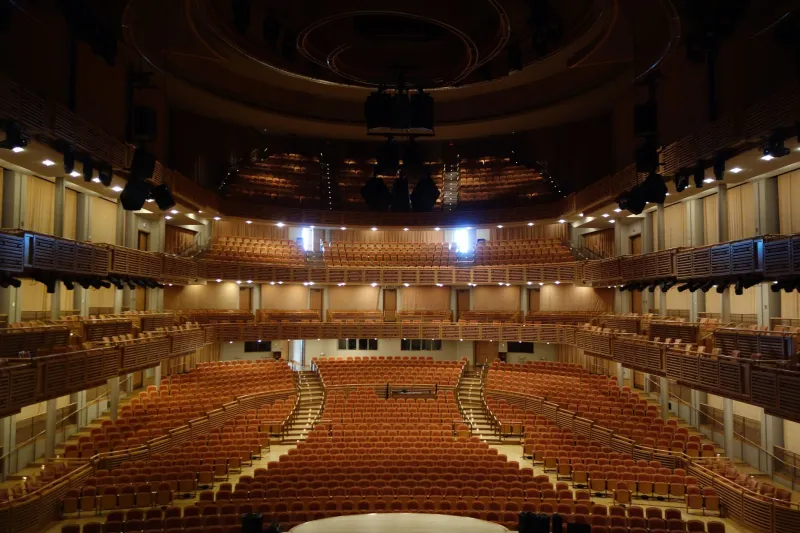
To appreciate the stage manager's authority, one must first understand the sheer complexity of a Broadway production at full throttle. A major musical — think the scale of Hamilton, The Lion King, or Hadestown — involves hundreds of lighting cues, dozens of sound transitions, automated set pieces moving on precise timelines, and a company of performers whose physical and emotional states fluctuate nightly. Someone must hold all of these threads simultaneously, without flinching.
That someone is the stage manager.
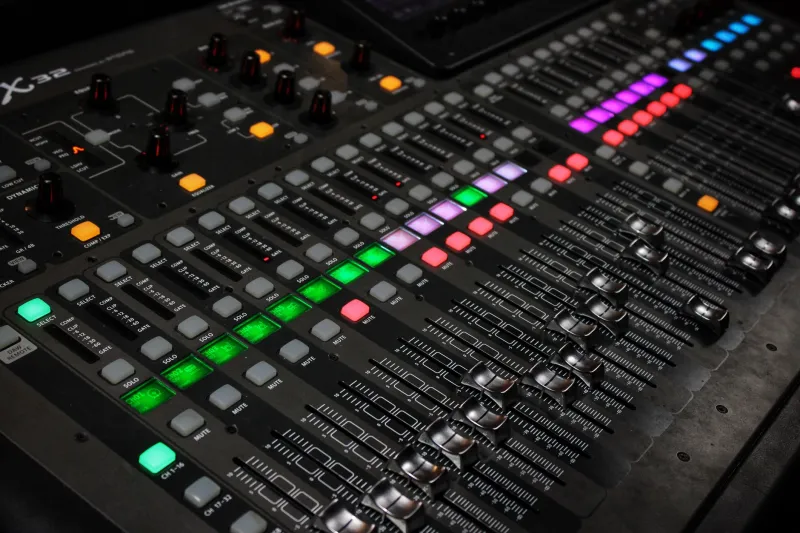
From their prompt desk, typically positioned in the wings or a dedicated booth, stage managers call every cue in real time. "LX 47, go. Sound 12, go. Fly cue 8, go." Each command is issued with the measured authority of a general directing field operations. One mistimed call — a lighting shift that arrives two beats early, a sound effect that bleeds into a monologue — can shatter the illusion that an entire production team has labored months to construct. The margin for error is, in practical terms, nonexistent.
Broadway stage managers often describe the calling of a show as something akin to conducting an orchestra while simultaneously narrating the score. The analogy is apt. They are not reacting to what is happening onstage — they are anticipating it, always three beats ahead, their eyes tracking multiple monitors, their ears attuned to every frequency of sound in the house.
Institutional Memory and the Living Archive
Beyond the nightly ritual of calling cues lies another dimension of the stage manager's dominion: institutional memory. A long-running Broadway production is a living organism, subject to cast replacements, understudy performances, touring company splits, and the inevitable drift that occurs when human beings repeat the same actions thousands of times. The stage manager is the keeper of the original vision — the one individual who remembers precisely how a scene was staged during the third week of rehearsals, why a particular blocking choice was made, and what the director intended before compromise and pragmatism reshaped the production.
This role as living archive is especially critical during actor transitions. When a new principal joins a cast — whether a fresh face stepping into a coveted role or a celebrated name taking over a long-established part — the stage manager becomes their most essential guide. They possess the production bible: a document of extraordinary detail that records every blocking note, every technical specification, every idiosyncratic choice made across weeks of rehearsal. In a very real sense, the stage manager is the production's memory, its continuity, and its conscience.
Diplomats, Therapists, and Tacticians
The purely technical dimensions of the role, formidable as they are, represent only a portion of what stage managers actually do. Perhaps their most underappreciated function is interpersonal: managing the volatile, high-stakes human ecosystem of a Broadway company.
A typical Broadway cast is a constellation of personalities — veteran character actors, rising stars, ensemble performers working their way up, and occasionally, a major film or television name navigating the particular demands of live performance for the first time. Add directors with exacting visions, choreographers protective of their work, and producers with financial anxieties, and the rehearsal room becomes a diplomatic theater unto itself.
Stage managers operate within this environment as neutral authorities. They enforce call times without apology, mediate disputes between departments, and serve as the primary communication channel between the director's table and the technical crew. When a star arrives forty minutes late to a protagonist-heavy rehearsal, it is the stage manager who absorbs the cascade of consequences — rescheduling, placating, recalibrating — without allowing the disruption to destabilize the broader company morale.
Many stage managers speak candidly about the emotional labor embedded in their work. They develop an intimate knowledge of each company member's rhythms, anxieties, and performance patterns. They know which performer needs silence before an entrance and which one requires energetic conversation to stay sharp. This emotional intelligence is not incidental to the job — it is central to it.
The Rehearsal Room as Kingdom
Long before opening night, the stage manager's dominion begins in the rehearsal room. During pre-production, they work alongside the director to construct the rehearsal schedule, coordinate with designers, and ensure that every department is aligned. They attend design meetings, technical rehearsals, and production conferences with the same diligence they will later bring to every performance.
In the rehearsal room itself, the stage manager documents everything. Blocking is recorded in meticulous shorthand. Script changes are tracked and distributed. Props are logged. Costume notes are relayed. When a director instructs an actor to cross downstage left on a specific line, the stage manager ensures that instruction exists in perpetuity — not just in the moment, but in the weeks and months that follow.
This documentation is not bureaucratic formality. It is the structural foundation upon which the entire production rests. Should a director depart after opening night — as is standard practice on Broadway — the stage manager becomes the primary guardian of directorial intent. They are, in effect, the production's constitutional monarch: bound by the original law of the work, responsible for its faithful execution long after its authors have moved on.
Recognition Deferred, Authority Undeniable
The theatrical world has grown increasingly vocal in recent years about crediting the full range of creative contributors who bring a production to life — designers, orchestrators, fight directors, and intimacy coordinators among them. Stage managers, however, remain conspicuously underrecognized in public discourse, even as their peers within the industry hold them in the highest regard.
Ask any Broadway director, choreographer, or principal performer about the stage managers with whom they have worked most closely, and the responses are invariably reverent. These are professionals described as indispensable, irreplaceable, and occasionally superhuman. Their names may not appear on marquees or in awards season conversations, but their presence — and more pointedly, their absence — is felt in every fiber of a production.
At Tsar Folies, we believe that every court deserves its full accounting. The sovereigns of the prompt desk have long governed Broadway's grandest empires from the wings, their authority absolute even when invisible. It is past time the house lights were turned, however briefly, in their direction.
The empire, after all, does not run itself.