The Architecture of Absence: How Broadway's Sound Designers Have Turned Silence Into the Stage's Most Commanding Voice
In a world of spectacle — of soaring orchestral swells, thunderous tap sequences, and vocal performances that rattle the rafters of even the grandest proscenium house — the most audacious move a Broadway production can make is to say nothing at all. Not the absence of preparation, nor the failure of technology, but a deliberate, architectural silence: engineered, calibrated, and deployed with the cold authority of a sovereign issuing a decree from the throne.
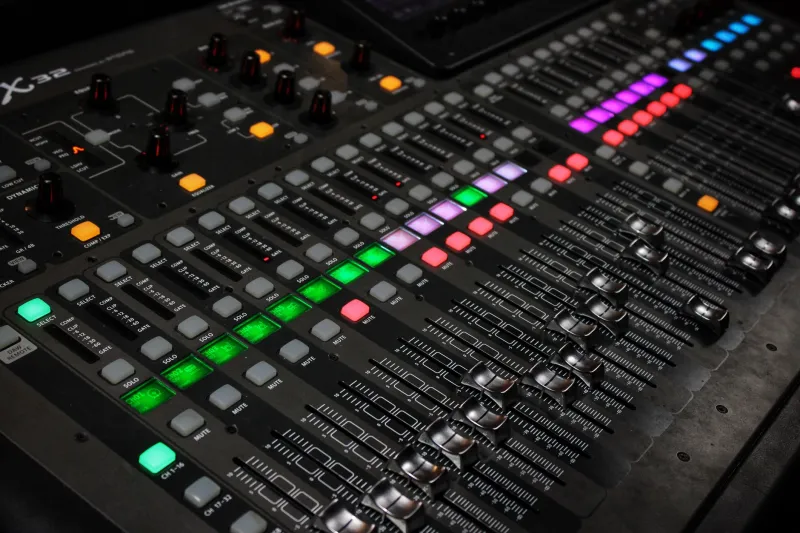
This is the domain of the Broadway sound designer, a title that still confounds casual theatergoers who assume the role amounts to little more than microphone placement and volume adjustment. In truth, the sound designer is something closer to a master cartographer, charting the full acoustic landscape of a production — every whisper, every ambient hum, every beat of charged stillness — and determining how each element conspires to move an audience from the inside out.
The Court No One Sees
Sound design occupies a peculiar position in the theatrical hierarchy. Unlike the scenic designer, whose painted kingdoms are immediately visible upon curtain rise, or the lighting designer, whose chromatic choices register with visceral immediacy, the sound designer operates in a register that audiences absorb without consciously recognizing. The craft is, by its most successful measure, imperceptible.
Yet the consequences of that craft are anything but subtle. A poorly designed acoustic environment can undermine even the most commanding performance. Conversely, a masterfully sculpted soundscape can elevate a modestly staged production into something that feels, inexplicably, like the work of royalty.
Tony Award recognition for sound design was introduced in 2008, a belated acknowledgment of a discipline that had long been shaping Broadway's most celebrated productions from the shadows. Since then, the category has illuminated the contributions of designers whose names were previously known only to industry insiders — figures whose work had been quietly ruling the emotional architecture of American theater for decades.
Silence as Sovereignty
The strategic deployment of silence is perhaps the most sophisticated tool in a sound designer's arsenal, and the one most frequently misunderstood by those outside the field. In conversation with practitioners working at the highest levels of the American theater, a consistent philosophy emerges: silence is not the absence of sound. It is a sound in its own right, and one that must be composed with the same intentionality as any musical phrase.
Consider the mechanics of a well-executed dramatic pause. In an untreated theatrical space, silence is never truly silent. The ambient noise of an audience — the barely perceptible rustle of programs, the collective breath of two thousand people — fills the void in ways that can either heighten tension or dissipate it entirely. The sound designer's task is to manage that ambient field, to sculpt the room's acoustic character so that when silence arrives, it lands with the full weight of intention.
In landmark productions, this principle has been deployed to devastating effect. The moment before a confession. The beat after a revelation. The stillness that precedes a character's collapse. These are not accidents of staging but engineered events, constructed through a combination of low-frequency room tone, carefully suppressed ambient bleed, and the strategic withdrawal of underscore — a technique sometimes referred to within the field as a "dead drop."
The Technology of Restraint
Modern Broadway sound design benefits from an extraordinary suite of technological resources that would have seemed fantastical to practitioners even twenty years ago. Immersive speaker arrays, capable of placing sound with near-surgical precision anywhere within a house, allow designers to create acoustic environments of remarkable specificity. A character's interior monologue can be made to feel as though it emanates from within the listener's own skull. A distant memory can be rendered with the gauzy, diffuse quality of something half-forgotten.
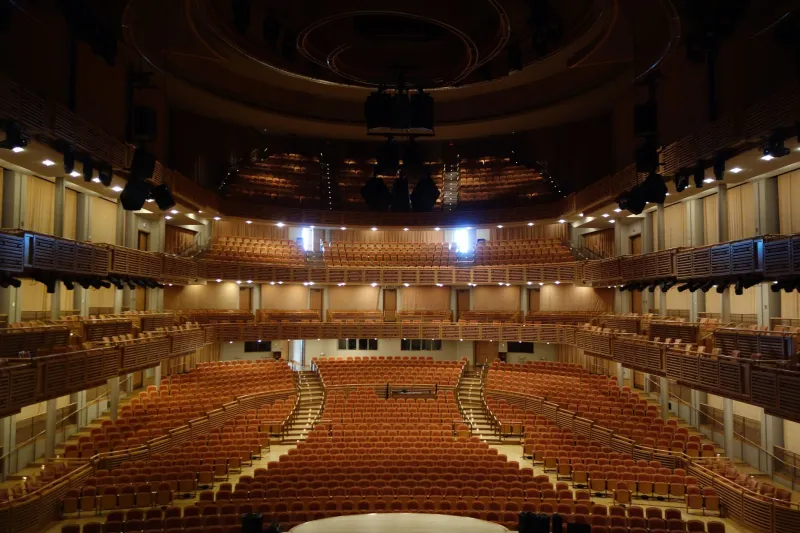
Yet the most compelling applications of this technology are not the loudest ones. Many of the field's most respected voices argue that the true test of a sound designer's mastery is not the production's most spectacular sonic moment, but its quietest. The ability to hold a house of fifteen hundred people in absolute, suspended stillness — to make the silence feel chosen rather than empty — requires a command of the acoustic environment that no amount of technical sophistication can substitute for artistic judgment.
Digital signal processing has also transformed the way ambient sound is constructed. Where earlier generations of designers relied on analog tape loops and live foley to populate the sonic world of a production, contemporary designers build layered soundscapes from vast libraries of recorded material, blending and modulating them in real time to respond to the live dynamics of performance. The result is an acoustic environment that breathes with the production rather than merely accompanying it.
Defining Scenes, Defining Productions
There are productions in recent Broadway memory where sonic choices did not merely support the narrative — they defined it. In intimate dramas where two characters circle each other across a spare stage, the decision to strip away all ambient support, to leave the actors exposed in an acoustically naked space, becomes a dramaturgical statement as powerful as any line of dialogue. The audience feels the exposure. The characters have nowhere to hide, and neither does the performance.
Conversely, productions that deploy ambient sound with layered complexity — the distant sounds of a city pressing against a domestic interior, the low atmospheric drone that signals psychological unraveling — create a kind of environmental pressure that the audience registers somatically, often without identifying its source. They feel unsettled, enclosed, or unmoored. They feel, in other words, exactly what the story requires them to feel.
This is the sound designer's most regal achievement: to move an audience through invisible means, to shape emotional experience without ever announcing the mechanism of that shaping.
A Discipline Claiming Its Crown
The broader theatrical community has been slow to fully appreciate the sovereignty of sound design, but that reckoning is arriving. Academic programs in theatrical sound design have expanded significantly at American conservatories and universities. Industry organizations have invested in advocacy and documentation of the discipline's history. And the designers themselves have grown increasingly vocal — and visible — in articulating the intellectual and artistic complexity of their work.
For audiences willing to attend to the acoustic dimension of a production with the same attentiveness they bring to its visual and narrative elements, the rewards are considerable. To hear a Broadway stage fall truly, deliberately, commandingly silent is to witness a kind of theatrical authority that no amount of spectacle can replicate. It is the sound designer's ultimate declaration: that in the kingdom of the stage, the most powerful voice is sometimes the one that says nothing at all.