Architects of Atmosphere: The Broadway Lighting Designers Who Rule From the Shadows
There is a particular kind of power that operates without applause. On any given Broadway opening night, thousands of theatergoers will emerge from a production deeply moved — their breath caught at a pivotal scene, their pulse quickened during a climactic moment — and the vast majority will attribute that emotional charge entirely to the performers on stage. Rarely will a single audience member pause to consider the invisible sovereign who orchestrated every shadow, every wash of amber warmth, every sudden plunge into darkness that made those performances feel so devastatingly real. That sovereign is the lighting designer, and it is long past time the theatrical world acknowledged the full weight of their reign.
The Grammar of Light
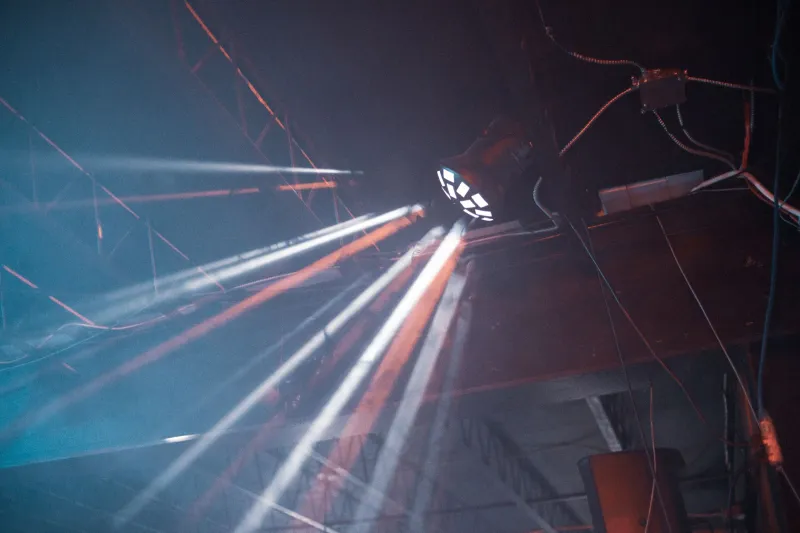
To understand the authority a lighting designer wields, one must first appreciate the fundamental language they have mastered. Light on a Broadway stage is never incidental. Every fixture positioned in the fly space, every gel selected from a palette of hundreds, every carefully programmed cue in a console that may contain thousands of individual commands — each decision is a word in a visual sentence that the audience reads without ever realizing they are reading.
Natasha Katz, a Tony Award-winning designer whose credits span decades of landmark productions, has described her craft as an exercise in emotional architecture. The lighting designer, she has noted, must understand the script as intimately as any director, because every tonal shift in the narrative demands a corresponding shift in the quality of illumination. A scene of grief requires something fundamentally different from a scene of triumph — not merely dimmer or brighter, but texturally and chromatically distinct in ways that register in the body before they register in the mind.
This is precisely what separates a competent lighting plot from a genuinely transcendent one. The former ensures that performers are visible. The latter ensures that the audience feels the story in their bones.
From Blueprint to Dominion
The process by which a lighting designer transforms an empty stage into a world of emotional consequence is laborious, iterative, and deeply collaborative. It begins, often months before a production opens, with conversations — with the director, the scenic designer, the costume designer, and the choreographer. Light does not exist in isolation; it is in perpetual dialogue with every other visual element on stage.
When a scenic designer constructs a set with particular surface textures, they are, in a very real sense, designing surfaces for light to play upon. When a costume designer selects fabrics, they are selecting materials that will interact with specific wavelengths of color in ways that can either elevate or undermine the lighting designer's intentions. The collaborative web is intricate, and the lighting designer sits at one of its most consequential nodes.
For recent productions such as The Lehman Trilogy and the revival of Sweeney Todd, lighting design was not merely supportive — it was constitutive. In Sweeney Todd, the production's decision to seat the audience within a reimagined meat pie shop placed extraordinary demands on the lighting team, who had to create atmosphere that functioned from 360 degrees and at close proximity to audience members who could scrutinize every nuance. The result was a masterwork of industrial shadow and gaslit menace that critics noted as inseparable from the production's overall impact.
The Technology of Transcendence
Modern Broadway lighting design operates at the intersection of artistry and engineering in ways that previous generations of designers could scarcely have imagined. The advent of LED technology has dramatically expanded the chromatic vocabulary available to designers, allowing for color mixing of extraordinary subtlety and precision. Automated fixtures — moving lights capable of shifting angle, color, and intensity in real time — have introduced a kinetic dimension to lighting that was once impossible to achieve.
Yet technology, as any serious designer will insist, is merely a more sophisticated brush. The painting still requires a painter. The risk of the contemporary moment is that the sheer abundance of available tools can seduce less disciplined designers into spectacle for its own sake — light shows that dazzle without meaning, color changes that distract rather than deepen. The most esteemed designers in the field maintain that restraint is the highest technical virtue. A single, perfectly chosen moment of near-darkness can carry more emotional weight than ten minutes of elaborate chromatic display.
Japhy Weideman, whose work on productions including Hadestown earned widespread critical admiration, has spoken extensively about the discipline of subtraction. His lighting for Hadestown drew on the visual language of Depression-era America and mythological underworld imagery simultaneously, deploying a palette of sulfurous yellows, deep industrial blues, and searing whites that told a parallel story to the one unfolding in the libretto. The lighting did not illustrate the narrative — it inhabited it.
The Invisible Coronation
What makes the lighting designer's authority so remarkable — and so philosophically interesting — is precisely its invisibility. A great performance announces itself. A great set declares its ambitions the moment the curtain rises. But great lighting design, at its most successful, disappears entirely into the experience it has created. The audience does not think about why they feel what they feel; they simply feel it. The designer's craft is so thoroughly absorbed into the production's emotional life that it becomes indistinguishable from the production itself.
This is, in its way, the purest form of theatrical power: influence so complete that it erases the evidence of its own existence.
The theatrical community has grown increasingly attentive to this dynamic. The Tony Awards category for Best Lighting Design of a Musical and Best Lighting Design of a Play has, in recent years, attracted greater press attention and industry conversation than it once did. Designers who were once known only within professional circles now find themselves profiled in mainstream publications, their aesthetic philosophies discussed with the same seriousness accorded to directors and playwrights.
A Royal Reckoning
At Tsar Folies, we have long maintained that the grandeur of any great theatrical production is never the work of a single sovereign. It is the product of a court — a constellation of artists whose individual contributions fuse, through some alchemy of collaboration and discipline, into something larger than any one of them could achieve alone. The lighting designer occupies a position in that court that is, in our estimation, among the most consequential and the most chronically underappreciated.
The next time you find yourself undone by a moment on stage — a character stepping into a shaft of cold blue light that seems to crystallize an entire emotional truth, or a scene dissolving into darkness so complete it feels like the world itself has held its breath — allow yourself to wonder who designed that moment. Somewhere in the back of the house, at a console surrounded by cue sheets and coffee cups, a sovereign has just exercised their dominion.
They deserve their crown.