Specters of the Grand Stage: The Haunted Theaters and Phantom Legends That Refuse to Take Their Final Bow
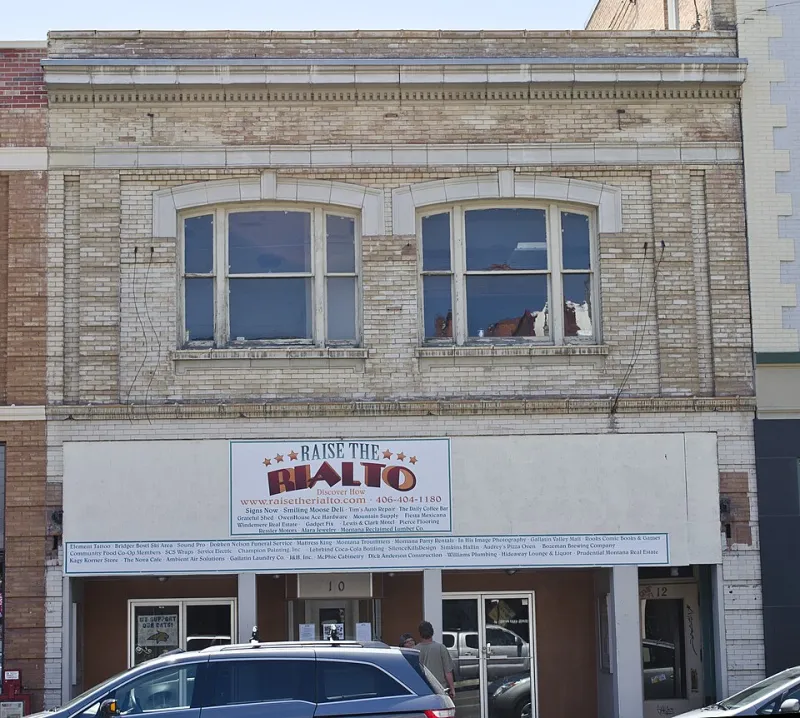
Photo: Tim Evanson, CC BY-SA 2.0, via Wikimedia Commons
Every grand theater holds its breath between performances. The house lights dim, the audience departs, and the building settles into a particular quality of silence that is not quite empty—a silence populated by the residue of ten thousand performances, the emotional accumulation of generations of human striving played out beneath a single proscenium arch. It is perhaps unsurprising that, in places where the boundary between reality and imagination is professionally dissolved night after night, the boundary between the living and the departed should occasionally grow thin as well.
America's most storied theaters are, by almost any measure, haunted. Whether one interprets that word literally or metaphorically is, in the end, a matter of personal philosophy. The stories themselves are not in dispute.
The Palace and Its Permanent Resident
The Palace Theatre on Broadway has long been regarded as the apex of American vaudeville and theatrical prestige—a house where careers were made and, on occasion, unmade with equal drama. It is also, according to a persistent tradition among stagehands and performers, home to at least one guest who never checked out.
The figure most frequently reported is that of Louis Borsalino, an acrobat who allegedly fell to his death during a performance in the early twentieth century. His presence, according to those who claim to have encountered it, is not malevolent but watchful—a professional observer, perhaps, unwilling to abandon the venue that defined his life's work. Stagehands have reported tools moved without explanation, ropes found in configurations no one remembers tying, and the occasional sensation of being observed from the fly space above.
Skeptical explanations abound, as they always do. Old buildings settle. Drafts move objects. Exhausted technicians misremember where they left things. And yet the stories persist with a consistency that transcends individual imagination.
The Majestic and the Chill That Never Quite Leaves
The Majestic Theatre, home to The Phantom of the Opera for its extraordinary Broadway run, developed a reputation that seemed almost too convenient—a house defined by phantom mythology, allegedly populated by an actual phantom. But the reports predate the production by decades.
Performers working late-night calls in the Majestic have described a persistent cold in certain backstage corridors that bears no relationship to the building's climate control systems. One frequently repeated account involves a dressing room mirror that has, on multiple documented occasions, appeared to fog from within despite no moisture source being present. Whether these phenomena are genuine, elaborated over time, or simply the natural consequence of a very old building in a very demanding climate is a question the theater's management has wisely declined to adjudicate publicly.
What is certain is that the Majestic's supernatural reputation has become inseparable from its identity—a quality of atmosphere that audiences and performers alike find, on some level, entirely appropriate for a house dedicated to spectacle and the uncanny.
The Orpheum Circuit's Restless Occupants
Beyond New York, the old Orpheum circuit theaters that once anchored entertainment culture in cities across the American interior carry their own considerable weight of legend. The Orpheum in Memphis, Tennessee, is perhaps the most documented case in the country.
Mary, as she has come to be known, is described as the spirit of a young girl who died in or near the theater in the early twentieth century. Reports of her presence—a small figure in period clothing, a child's laughter in an empty balcony, seats that depress as though occupied during performances—have been submitted by staff members, performers, and audience patrons over many decades. The Orpheum's management has embraced rather than suppressed this legacy, incorporating it into the theater's public identity with a candor that has proven, commercially and culturally, rather shrewd.
The Orpheum in San Francisco, the Oriental in Milwaukee, and the Fox Theatre in Atlanta each carry their own catalogs of inexplicable occurrence. In buildings that have witnessed a century of human emotion concentrated into the particular intensity that only live performance generates, the accumulation of story feels less like superstition and more like architectural memory.
When the Stage Itself Seems to Intervene
Perhaps the most theatrically compelling category of supernatural theater legend involves not the appearance of figures but the behavior of the technical apparatus—the sense that the stage itself, on certain occasions, acts with intention.
Lighting boards that illuminate scenes not programmed in the cue stack. Fly systems that lower set pieces at precisely the wrong—or, unnerving to consider, precisely the right—moment. Sound equipment that produces voices or music from sources no technician can identify. These accounts come not from impressionable audience members but from professional technical staff whose livelihoods depend on understanding exactly how theatrical machinery functions.
The explanations offered by engineers and electricians are invariably sensible: aging equipment, electromagnetic interference, the particular vulnerabilities of analog systems in buildings with complicated electrical histories. These explanations are almost certainly correct. And yet the stories of the perfectly timed malfunction—the spotlight that illuminated a grieving actor's face at a moment of genuine personal crisis; the sound cue that played a dead performer's recorded voice on the anniversary of their passing—resist reduction to mere mechanical failure.
Legend as Living Dramaturgy
What these stories share, beneath their surface differences, is a function within the theatrical community that transcends entertainment. Ghost stories in theaters are a form of institutional memory—a way of preserving the emotional and historical weight of spaces that have witnessed extraordinary human experience. They are also, not incidentally, a form of professional solidarity: a reminder that the performers and technicians who inhabit these spaces are part of a lineage that extends backward through time and forward into an uncertain future.
The theater has always understood that the most powerful stories are the ones that cannot be fully explained. The ghost in the fly space, the cold in the corridor, the light that comes up on its own—these are, in their way, the most honest acknowledgment a building can make of its own history. Every stage that has hosted greatness carries that greatness within its walls. The question of whether greatness leaves something behind when the performer departs is one that every working theater artist, in their more reflective moments, has considered.
The answer, if the legends are to be believed, is yes. Emphatically, persistently, and occasionally at three in the morning in an empty house, yes.