The Silent Crown: How Broadway's Understudies Reign in the Shadows
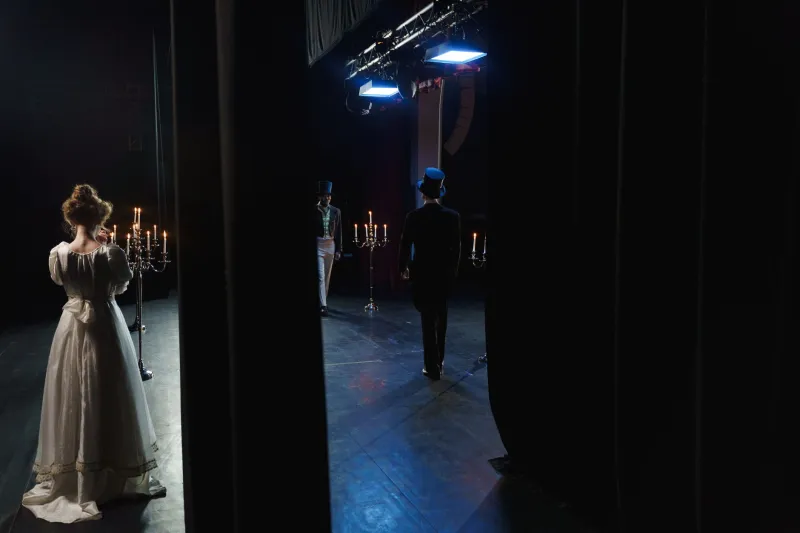
In the grand court of Broadway, there exists a class of performer whose dedication surpasses almost every visible measure of theatrical excellence — and whose name, more often than not, appears in the smallest possible font inside a program. They are the understudies: those who prepare relentlessly for a moment that may never arrive, who hold entire productions together from the wings, and who, when circumstance finally grants them the stage, are expected to perform as though they have been there all along.
To dismiss the understudy as merely a safety net is to fundamentally misunderstand the architecture of American theatrical royalty. These performers are not reserves. They are, in every meaningful sense, co-sovereigns of their productions — schooled in the same material, bound by the same artistic standards, and subject to the same unforgiving scrutiny of opening night.
The Weight of a Crown Never Worn
Consider the particular discipline required to master a role one may perform only a handful of times across an entire run — or perhaps not at all. Broadway understudies typically carry the full burden of preparation without the corresponding reward of regular performance. They attend rehearsals, often while simultaneously appearing in the ensemble, and they are expected to step into a principal role with little more than a few hours' notice.
"You learn to hold the performance inside you like a secret," explains one veteran understudy who has covered leading roles in three major Broadway productions over the past decade. "You're always ready. You have to be. But you also have to make peace with the fact that readiness may be the entirety of your contribution."
This psychological equilibrium — between vigilance and acceptance — is perhaps the understudy's most extraordinary skill, and the one least acknowledged by the industry's reward structures. Tony Awards, marquee billing, and curtain call prominence are calibrated to celebrate the performer audiences see most often. The understudy operates in a parallel economy of recognition, where respect is earned quietly and currency is rarely exchanged in public.
Politics Behind the Velvet Curtain
The social dynamics of an understudy's position are rarely straightforward. Navigating the relationship with the principal performer one is assigned to cover requires a particular kind of diplomatic grace. Too eager, and one risks appearing predatory. Too deferential, and one may never cultivate the confidence to truly inhabit the role when the moment arrives.
Former understudy and now principal performer Marcus Delray, who covered a leading role in a celebrated Broadway revival before earning his own starring vehicle, describes the experience with characteristic candor. "There is an unspoken protocol," he says. "You are rooting for the person whose role you carry — genuinely, because their health and their success protects the production. But you are also, quietly, always prepared for the other possibility. That tension never fully disappears."
Producers and directors, for their part, acknowledge that the casting of understudies is itself a strategic exercise. An understudy must be talented enough to protect the production's reputation on short notice, yet the selection process does not always prioritize those with the greatest artistic potential. Scheduling compatibility, physical resemblance to the principal, and even interpersonal chemistry within the company all influence who receives the assignment.
When the Throne Finally Arrives
For those understudies who do receive their moment, the experience is frequently transformative — and the industry has a long history of such elevations reshaping careers in dramatic fashion. The mythology of Broadway is populated with stories of the understudy who stepped in, electrified an audience, and never looked back.
What those stories often omit is the years of invisible preparation that preceded the breakthrough. When an understudy delivers a performance that earns a standing ovation, it is not the result of spontaneous inspiration. It is the culmination of months, sometimes years, of disciplined rehearsal conducted largely without an audience.
"The night I finally went on," recalls one performer who understudied a lead in a long-running musical, "I had performed that role approximately two hundred times in my own apartment. Every staging note, every vocal transition, every emotional beat — I had lived with it so long that walking onto that stage felt less like a debut and more like a homecoming."
The critical and audience response to understudy performances has, in recent seasons, become a cultural conversation of its own. Theater communities on social media have developed a genuine appreciation for the understudy phenomenon, with dedicated followers who specifically attend performances covered by understudies, drawn by the particular energy of a performer finally given their due.
A Hierarchy Worth Examining
The understudy's position illuminates something essential about how Broadway — and, by extension, American theatrical culture — assigns value and visibility. The production apparatus is designed around a hierarchy that privileges the performer whose name anchors the marketing campaign, and that hierarchy is not without its justifications. Star power drives ticket sales. Audience expectations are shaped by specific names and faces.
Yet the understudy system quietly challenges the assumption that theatrical excellence is the exclusive province of those at the top of the billing. Night after night, in rehearsal rooms and in the wings, performers of extraordinary capability demonstrate that the crown of a great role is never truly the property of a single individual. It belongs, in some meaningful sense, to every artist who has mastered it.
Broadway's most thoughtful directors have long understood this. "When I cast an understudy," notes one Tony Award-winning director, "I am casting a second interpretation of the role. I want someone who could genuinely offer audiences something revelatory — not just someone who can get through the blocking without incident."
The Making of a Theatrical Sovereign
For the performers themselves, the understudy experience — however frustrating its constraints — often proves to be an education unrivaled by any other path through the industry. The discipline of sustained readiness, the study of a role from the outside before inhabiting it from within, and the navigation of complex professional relationships all contribute to an artistic maturity that distinguishes many of Broadway's most respected performers.
The silent crown of the understudy is, in many ways, the most demanding coronation in American theater. It asks everything of a performer and promises very little in return — except, perhaps, the deep satisfaction of being genuinely prepared when the stage finally calls your name.
In a world where every performance aspires to the condition of royalty, it is worth remembering that some of the most sovereign artistry in American theater has been practiced, perfected, and held in waiting by those whose names the audience may never think to ask.