The People's Stage: How Community Theater Is Toppling Broadway's Monopoly on Magnificence
For generations, Broadway has occupied the throne of American theatrical life with near-absolute authority. Its marquee lights have served as beacons of legitimacy, its Tony Awards as the ultimate conferral of dramatic nobility. To perform on a Manhattan stage was, in the popular imagination, to be anointed. Everything else — the regional playhouse, the high school auditorium, the converted warehouse on the edge of a mid-sized city — was understood to be the provinces: earnest, perhaps charming, but ultimately subordinate to the imperial center.
That understanding is now being challenged with remarkable force.
Across the United States, community theater is experiencing a renaissance so vigorous, so creatively ambitious, and so emotionally resonant that it has begun to complicate the long-held assumption that theatrical magnificence is a commodity available only to those with seven-figure budgets and a Times Square address. From Boise to Baton Rouge, from suburban Chicago to the outer boroughs of New York itself, grassroots productions are drawing devoted audiences, cultivating extraordinary talent, and delivering performances of genuine, unadorned power.
A Kingdom Built from the Ground Up
The American Community Theatre Association estimates that more than 7,000 community theater organizations currently operate across the country, collectively staging tens of thousands of productions each year and engaging millions of participants — not merely as audience members, but as performers, directors, set designers, costumers, and stagehands. These are not vanity projects or amateur dabblings. Many are sustained, serious enterprises with decades of institutional history and artistic standards that would not embarrass a professional company.
Consider the Rogue Theater Festival in Tucson, Arizona, which has spent years cultivating a reputation for challenging, intellectually rigorous work that draws audiences from across the region. Or the Millbrook Playhouse in rural Pennsylvania, which has produced summer seasons for over six decades. Or the countless storefront theaters in cities like Austin, Denver, and Minneapolis where ensembles of working adults — teachers, nurses, engineers — rehearse four nights a week for months to mount productions of Shakespeare, Sondheim, and contemporary playwrights with a devotion that borders on the monastic.
"People assume that because we're not paid, we're not serious," says Patricia Harwell, a high school chemistry teacher who has performed in and directed community productions in the Columbus, Ohio area for nearly two decades. "But I would argue the opposite. When there's no financial incentive, what remains is pure love for the work. That changes the quality of what you bring to a rehearsal room."
The Auditorium as Throne Room
What makes the current moment particularly striking is not merely the quantity of community productions, but their ambition. Directors and performers who once confined themselves to proven crowd-pleasers — the reliable Rodgers and Hammerstein catalog, the perennial community theater staples — are now mounting productions of staggering scale and conceptual daring.
In Portland, Oregon, a community ensemble recently staged a production of Sweeney Todd with a cast of forty, a live orchestra assembled from local musicians, and a set design that drew comparisons, in the local press, to professional regional theater. In Atlanta, a community group mounted an original devised piece exploring the history of the city's Black theater tradition, drawing sold-out audiences for a three-week run. In rural Vermont, a company with no permanent home produced Les Misérables in a repurposed barn, seating audiences on hay bales and charging twelve dollars per ticket.
These are not approximations of theatrical grandeur. They are the genuine article, arrived at through different means.
"There is something about the scale of community theater that actually serves the work," observes Marcus Deleon, a director who has worked in both professional regional theater and community productions throughout the Pacific Northwest. "When you're performing in an intimate space for an audience that includes your neighbors, your children's teachers, people who will see you at the grocery store the next morning — the performance becomes something entirely different. The stakes are, in some ways, higher. There is nowhere to hide behind spectacle."
The Audience Reborn
Perhaps no aspect of the community theater renaissance is more significant than its effect on audiences. Broadway, for all its splendor, has become — particularly in the post-pandemic era — an increasingly exclusive experience. The median ticket price for a Broadway show now exceeds one hundred and twenty dollars, with premium seating routinely commanding several hundred. For many American families, a trip to a Broadway production has become an occasional luxury rather than a regular cultural practice.
Community theater, by contrast, remains genuinely accessible. Tickets frequently cost between ten and thirty dollars. Productions occur in neighborhoods where audiences actually live. The performers are known quantities — the man playing Willy Loman coached your son's Little League team; the woman singing Maria grew up three streets over.
This proximity, far from diminishing the theatrical experience, appears to deepen it in ways that are difficult to quantify but easy to feel.
"I cried harder at a community production of Our Town in a church basement in Evanston than I have at some of the most lavishly produced shows I've seen in New York," admits theater critic and essayist Joanna Fitzgerald, who writes about performance culture for several national publications. "And I've thought about why that is. Part of it is that the actors weren't performing for me in the abstract. They were performing for their community. There was a specificity of love in the room that no Broadway production can manufacture."
The New Nobility of the Neighborhood Stage
None of this is to suggest that Broadway has abdicated its throne, or that community theater aspires to replace it. The relationship between the two is perhaps better understood as complementary — a vast, interconnected ecosystem of dramatic expression in which the grassroots and the grand coexist, each enriching the other.
Many of Broadway's most celebrated performers began in community productions. Many of the most innovative professional directors trace their formative theatrical experiences to local playhouses and school auditoriums. The pipeline runs in both directions: Broadway ideas filter down to community stages, and community theater continuously replenishes the professional world with passionate, trained, and deeply committed artists.
What is changing, however, is the cultural valuation of that community work. For too long, the grassroots stage was regarded as a stepping stone — a place of preparation rather than arrival. Increasingly, audiences and practitioners alike are insisting that it be recognized as a destination in its own right: a place where theatrical excellence flourishes not despite limited resources, but sometimes because of them.
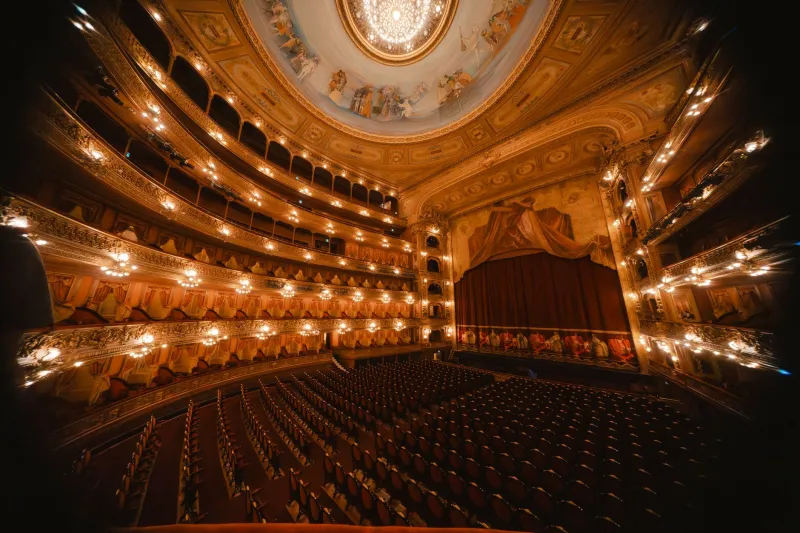
The regal quality of a performance, after all, has never been a function of the size of its chandelier. It is a function of the depth of its commitment, the honesty of its emotion, and the willingness of its participants to offer something true to the people assembled before them.
By that measure, the throne room is everywhere.